
Protein & Medication Timing Calculator
This calculator shows how protein intake affects medication absorption, especially for Parkinson's patients taking levodopa. Studies show protein can reduce medication effectiveness by 30-50% when taken with meals containing more than 15g of protein.
Enter protein amount to see effect
What if the steak you ate for lunch is making your medication less effective? It sounds unlikely, but for people taking certain drugs-especially those for Parkinson’s disease-what you eat and when you eat it can mean the difference between feeling in control and suddenly crashing into a ‘wearing-off’ episode. Protein-rich foods don’t just build muscle; they can actively interfere with how your body absorbs medications. This isn’t a myth or a vague warning. It’s a well-documented, clinically significant interaction that affects thousands of people every day.
How Protein Blocks Medication Absorption
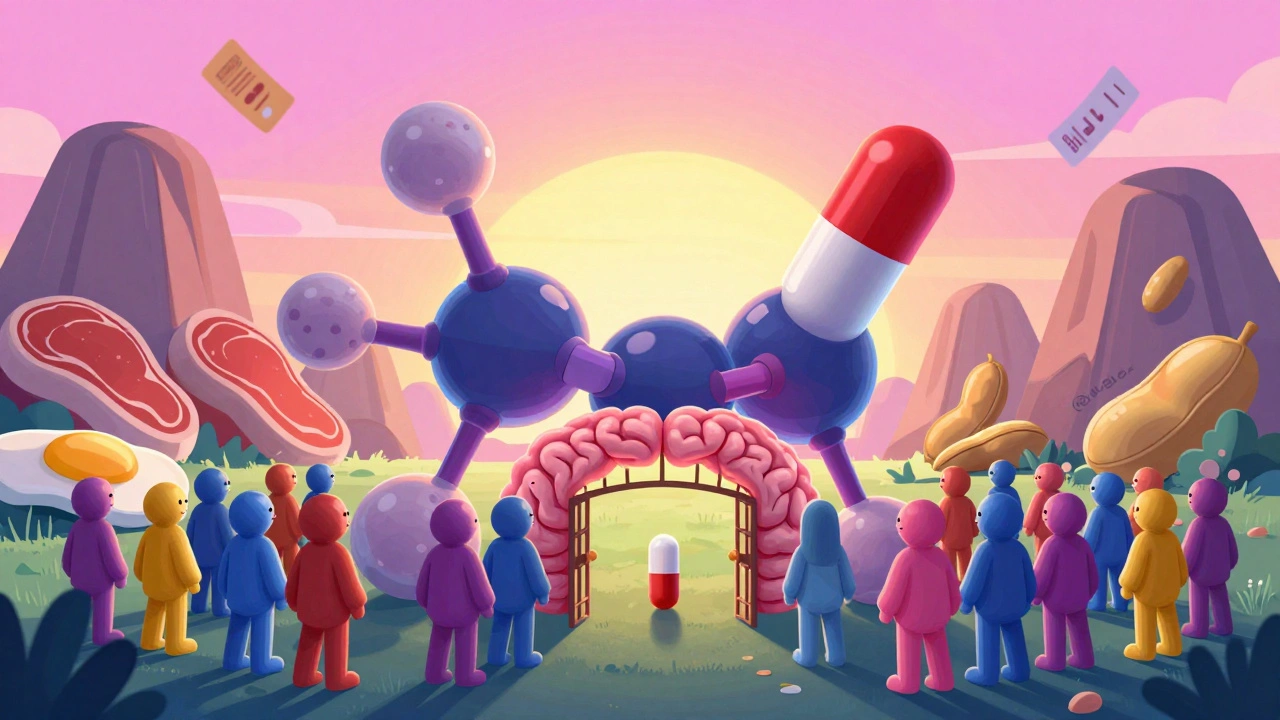
The body doesn’t treat all nutrients the same. When you eat protein, your digestive system breaks it down into amino acids. These amino acids then compete with certain medications for the same transporters in your gut and brain. One of the most studied examples is levodopa, the main drug used to treat Parkinson’s. Levodopa uses large neutral amino acid transporters (LNAATs) to cross the blood-brain barrier. But so do amino acids like leucine, isoleucine, and valine-found in high amounts in meat, eggs, dairy, and soy.
When these amino acids flood your bloodstream after a protein-heavy meal, they crowd out levodopa. The result? Less of the drug reaches your brain. Studies show this can reduce levodopa absorption by 30% to 50% in about 60% of patients. That’s not a small drop-it’s enough to make symptoms like stiffness, tremors, and freezing return hours earlier than expected.
This isn’t just about levodopa. Other drugs affected include certain antibiotics (like penicillins), some antiepileptics, and even thyroid medications. The Biopharmaceutics Classification System (BCS) helps explain why. Drugs in BCS Class III-those with high solubility but low permeability-are especially vulnerable. Levodopa falls into this category. It dissolves easily but struggles to get through cell membranes. When amino acids are waiting at the gate, levodopa gets stuck outside.
Why Protein Is Different from Fat or Fiber
You’ve probably heard that fatty meals slow down drug absorption. That’s true. High-fat meals delay gastric emptying by up to 90 minutes, which can delay when a drug hits your bloodstream. Fiber can bind to drugs like statins and reduce their absorption by 15-20%. But protein? It’s more complex.
Protein doesn’t just slow things down-it actively competes. While fat delays, protein blocks. And it doesn’t just affect the gut. It interferes at the blood-brain barrier too. That’s why protein’s impact is more targeted and harder to predict. Two people taking the same dose of levodopa might have wildly different results based on what they ate an hour earlier.
Here’s another twist: protein also increases blood flow to the intestines by 25-30%. That means for some drugs, protein might actually help absorption. But for transporter-dependent drugs like levodopa, the competition effect wins out. That’s why timing matters more than total protein intake.
The Levodopa Problem: Real Numbers, Real Lives
Let’s get specific. If you take 100mg of levodopa on an empty stomach, you might get 80mg into your bloodstream. Eat a 50g protein meal-like a chicken breast with a side of beans-and that drops to 60mg or less. That’s a 25% drop in bioavailability. For someone with advanced Parkinson’s, that’s the difference between moving freely and being stuck.
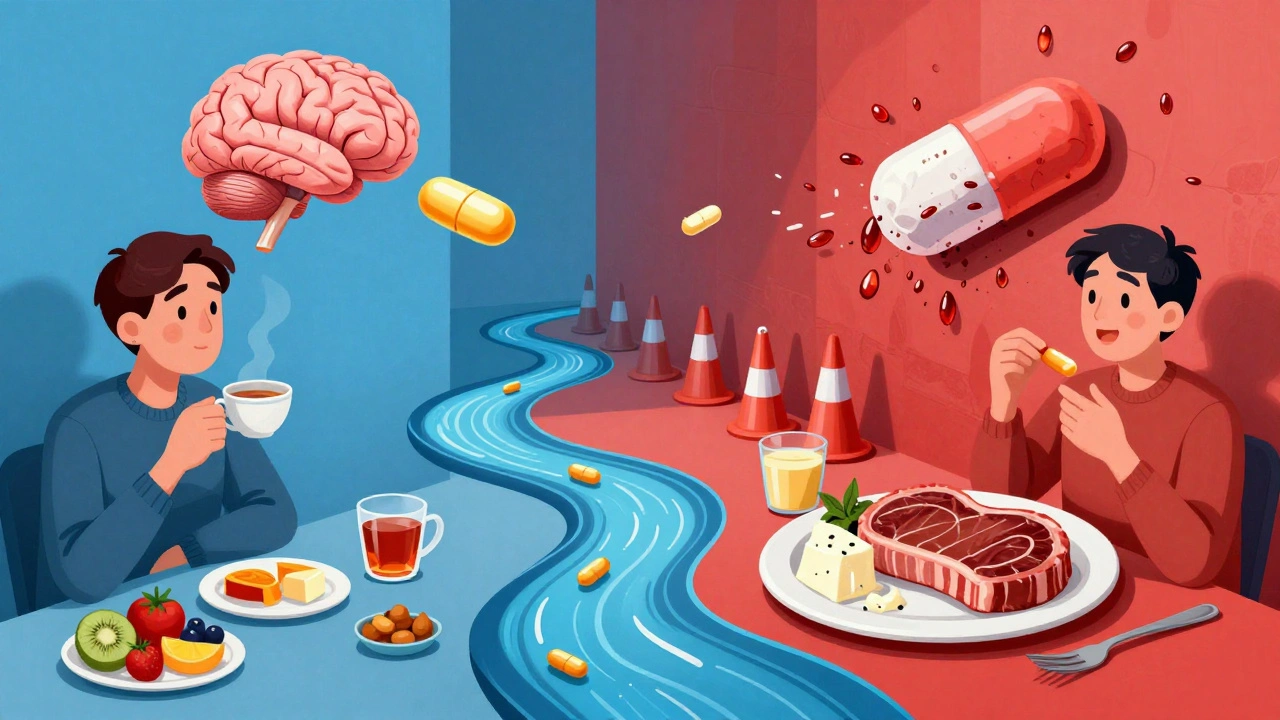
Research from the Michael J. Fox Foundation shows that patients who take levodopa 30 to 60 minutes before meals see a 35% improvement in ‘on’ time-the period when medication is working. Those who take it with meals report symptoms returning 2 to 3 hours earlier. One patient, tracked with a wearable sensor, saw their daily ‘off’ time drop from 5.2 hours to 2.1 hours after switching to protein redistribution: eating most protein at dinner, and keeping breakfast and lunch light.
But here’s the catch: cutting protein too much is dangerous. A 2024 study in the Journal of Parkinson’s Disease found that 23% of patients on strict low-protein diets developed muscle wasting within 18 months. Protein isn’t the enemy. It’s the timing and distribution that need fixing.
What Experts Are Saying
Dr. Alberto Espay, a leading neurologist and 2023 recipient of the Movement Disorder Society’s top award, calls protein redistribution ‘underutilized despite strong evidence.’ Yet, according to the American Society for Nutrition, 68% of doctors don’t even talk to their patients about protein timing when starting levodopa.
Dr. Robert Venuto from the University of Rochester says protein interactions cause 12-15% of therapeutic failures in Parkinson’s-but only 37% of neurologists check patients’ diets. Meanwhile, the European Medicines Agency found that 61% of medication labels give no guidance on protein, even when interactions are proven.
This gap between science and practice is dangerous. Patients aren’t being warned. They’re left guessing why their meds stop working after lunch. And when they search online, they find conflicting advice.
How to Get It Right: Practical Strategies
You don’t need to go on a low-protein diet. You need a smarter schedule.
- Take levodopa 30-60 minutes before meals. This is the gold standard. If you eat breakfast at 8 a.m., take your dose at 7:15 a.m. No coffee, no toast, no yogurt-just water.
- Save protein for dinner. Aim for 70% of your daily protein at your evening meal. That means a light breakfast (oatmeal, fruit, tea) and lunch (salad, soup, rice noodles). Dinner can be the steak, the fish, the tofu.
- Use low-protein snacks if you get nauseous. If you can’t wait 60 minutes, try a snack with under 5g of protein: a banana, apple slices, or 1 slice of low-protein bread (2g protein vs. 5g in regular).
- Track your protein. Apps like ‘ProteinTracker for PD’ let you log meals and see how they affect your symptoms. Users report 40% fewer timing mistakes.
- Watch for hidden protein. Granola bars, protein shakes, even some ‘healthy’ soups can have 7-10g of protein. That’s enough to interfere.
Registered dietitians who specialize in Parkinson’s typically spend 3-4 sessions teaching this. Patients who follow the plan see 85% adherence after three months-and a 2.5-hour daily increase in ‘on’ time.
What’s Changing in 2025
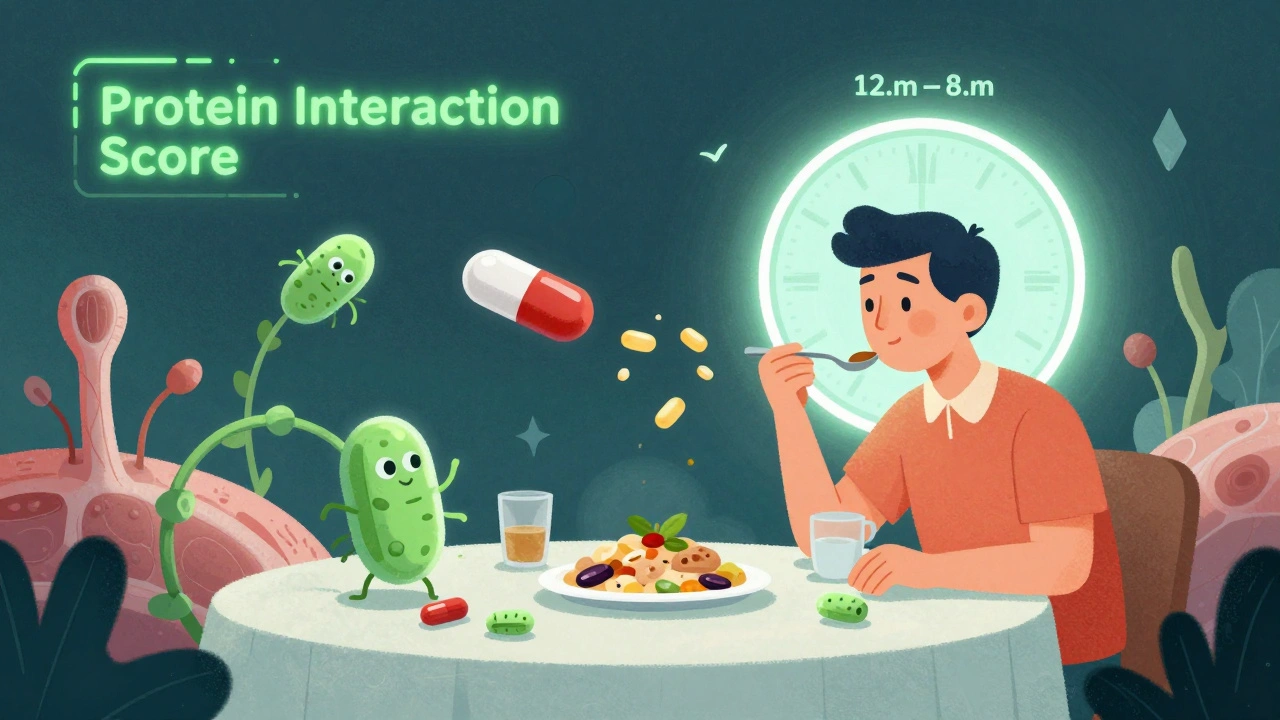
This isn’t just old advice. The field is moving fast. In January 2025, the European Medicines Agency made it mandatory for all CNS drugs to include protein interaction warnings on labels. The FDA is testing a new ‘Protein Interaction Score’-like the alcohol warning on pills-so you’ll know at a glance if your med is affected.
Pharmaceutical companies are catching up. 92% of Phase III drug trials now include food-effect studies, up from 67% in 2020. New delivery systems like Duopa, a gel pumped directly into the intestine, bypass the stomach entirely and avoid protein interference altogether. Over 12,000 people in the U.S. are now using it.
Even the gut microbiome is getting involved. A March 2025 study in Nature Medicine found that certain probiotics reduced amino acid competition for drug transporters by 25%. Early, but promising.
And the biggest shift? Time-restricted eating. A 2025 study from the Michael J. Fox Foundation found that limiting protein intake to just 12 p.m. to 8 p.m. improved levodopa effectiveness by 32%-without risking muscle loss. Patients didn’t cut protein; they just moved it to a window when it wouldn’t interfere with daytime meds.
What You Should Do Now
If you’re on levodopa or another drug known to interact with protein:
- Check your medication guide. Does it mention food or protein? If not, ask your doctor.
- Start tracking your meals and symptoms for one week. Note when you take your med and what you ate.
- Try taking your dose 45 minutes before breakfast. See how you feel by noon.
- Ask for a referral to a dietitian who specializes in neurology or Parkinson’s. They’re rare, but they exist.
- Don’t eliminate protein. Redistribute it. Your muscles need it. Your meds need space.
This isn’t about dieting. It’s about working with your body’s biology-not against it. The science is clear. The tools exist. The real question is: are you getting the right advice?
Can protein really make my Parkinson’s medication less effective?
Yes. Protein-rich meals can reduce levodopa absorption by 30% to 50% in about 60% of patients. This happens because amino acids from protein compete with levodopa for the same transporters in the gut and brain. The result is less drug reaching the brain, leading to earlier ‘wearing-off’ symptoms. This is one of the most well-documented food-drug interactions in neurology.
Should I stop eating protein if I take levodopa?
No. Cutting protein too much can lead to muscle loss, weakness, and malnutrition. A 2024 study found that 23% of Parkinson’s patients on strict low-protein diets developed muscle wasting within 18 months. Instead, redistribute your protein: eat lighter meals during the day and save 70% of your daily protein for dinner. This gives your meds space to work when you need it most.
What’s the best time to take levodopa with meals?
Take levodopa 30 to 60 minutes before meals that contain more than 15g of protein. This allows the drug to be absorbed before amino acids from food flood your system. If you can’t wait that long, have a low-protein snack (under 5g) like a banana or apple to ease nausea, but avoid meat, eggs, dairy, or soy products until after your dose.
Are there other medications besides levodopa affected by protein?
Yes. Certain antibiotics (like penicillins), some antiepileptic drugs (such as gabapentin and phenytoin), and even thyroid medications can be affected. Any drug that uses the same transporters as amino acids-especially those classified as BCS Class III-is at risk. Always check your medication guide or ask your pharmacist if protein could interfere.
Do all protein sources affect medication the same way?
Yes, in terms of amino acid content. Whether it’s chicken, tofu, eggs, or whey protein powder, they all contain the same large neutral amino acids that compete with levodopa. The source doesn’t matter-only the total amount. A 100g chicken breast (30g protein) and a scoop of protein powder (25g protein) have similar effects. What matters is timing and distribution, not the type of protein.
Can I use protein shakes or supplements with my meds?
Avoid protein shakes within 2 hours before or after taking levodopa or other sensitive medications. Even a single shake can contain 20-30g of protein, enough to block absorption. If you need extra protein, choose low-protein alternatives or save your shake for dinner, when it won’t interfere with daytime meds. Always check the label-many ‘healthy’ shakes are loaded with protein.
How do I know if my medication is affected by protein?
Look for signs like symptoms returning sooner than expected, especially after meals. If you notice your meds work better in the morning before breakfast, but wear off faster after lunch or dinner, protein interference is likely. Check your medication guide for food interaction warnings. If none exist, ask your doctor or pharmacist. You can also use apps like ProteinTracker for PD to log meals and symptoms and spot patterns.
If you’re managing a chronic condition that relies on precise medication absorption, small changes in timing and diet can lead to big improvements. This isn’t about perfection-it’s about awareness. The science is here. The tools are available. The question now is whether you’re getting the information you need to make it work.
Comments (13)
Ronan Lansbury
Of course the pharmaceutical-industrial complex wants you to believe protein is the enemy. Meanwhile, they’re patenting ‘protein redistribution’ as a proprietary protocol while charging $800/month for ‘PD-optimized’ meal plans. The real issue? They don’t want you to know levodopa was originally derived from the Vicia faba plant - the humble fava bean - which is itself protein-rich. They turned nature’s solution into a problem to sell you more drugs. Wake up.
Shelby Ume
Thank you for this incredibly thoughtful and clinically grounded breakdown. As someone who’s spent years working with neurology patients, I can’t tell you how many times I’ve seen folks blame their meds for ‘failing’ - when really, it’s just lunchtime. This isn’t about restriction; it’s about rhythm. The protein redistribution strategy is one of the most underused, evidence-backed tools we have. If your doctor hasn’t mentioned this, ask for a referral to a neuro-dietitian. It’s life-changing.
Casey Mellish
As an Aussie who’s watched my dad navigate Parkinson’s for 12 years, I can confirm: timing matters more than anything. We used to serve him steak at 7 a.m. - he’d be frozen by noon. Then we switched to a light breakfast of oats and berries, saved the lamb chops for 7 p.m., and suddenly he was dancing at his granddaughter’s birthday. No magic. Just biology. The science here is rock-solid - and it’s free. Why aren’t clinics screaming this from the rooftops?
Tyrone Marshall
There’s a deeper truth here: we treat medication like a bullet - fire it and forget it. But the body isn’t a machine. It’s a conversation. Protein doesn’t ‘block’ levodopa - it negotiates. The amino acids aren’t villains; they’re just doing their job. The problem is we’ve forced a biological system to operate on a corporate schedule - pills at 8 a.m., lunch at 12 p.m., dinner at 6 p.m. - without asking what the body actually needs. Maybe the real solution isn’t just redistribution… but rethinking time itself.
Yatendra S
Bro this is wild 😮💨 I took my meds with my protein shake this morning and now I’m basically a zombie. Thanks for the wake-up call. Going low-protein breakfast from now on. 🍌🙏
Himmat Singh
While the empirical data presented is not without merit, one must interrogate the epistemological foundations of the Biopharmaceutics Classification System itself. The BCS, as a reductionist framework, fails to account for interindividual variability in gut microbiota composition, which demonstrably modulates amino acid transporter expression. To reduce complex pharmacokinetics to a simplistic protein-timing heuristic is to commit the fallacy of oversimplification. The solution lies not in meal scheduling, but in personalized omics-driven therapy.
Jamie Clark
Stop being so polite. This isn’t ‘advice’ - it’s a cover-up. The drug companies knew this for decades. They buried it because if people knew protein interfered, they’d stop buying their expensive, overpriced pills and just eat dinner later. They don’t care if you freeze up at 2 p.m. - they care about quarterly earnings. Wake the f*** up. This is corporate malpractice dressed up as ‘science.’
Keasha Trawick
OMG I JUST REALIZED - my ‘wearing-off’ episodes happen right after my ‘healthy’ post-workout smoothie. That’s not protein powder, that’s a drug sabotage grenade. 🤯 I’ve been dumping 30g of whey in there like it’s a gift from the gods. Spoiler: it’s not. I’m switching to banana + almond butter. My tremors just sighed in relief.
Bruno Janssen
I’ve been doing this for years. Took my meds before breakfast. No protein until dinner. My wife says I’m ‘better.’ I don’t know what she means. I just don’t feel like I’m dying every afternoon. I don’t want praise. I just want to know why no one told me sooner.
Scott Butler
This is why America is falling apart. You can’t fix a genetic disorder with meal planning. You need real medicine - not some hippie ‘eat dinner late’ nonsense. In my day, we took our pills and didn’t worry about what we ate. Now we’re turning patients into nutritionists. Pathetic. And why is everyone talking about Europe’s rules? We don’t need foreign bureaucrats telling us how to live.
Emma Sbarge
My neurologist never mentioned this. I’m 52, have had Parkinson’s for 6 years, and just learned that my ‘protein smoothie’ was sabotaging my meds. I’m not mad - I’m relieved. This changes everything. I’m printing this out and taking it to my next appointment. Thank you for writing this like someone who actually cares.
Tommy Watson
lol so i just took my meds with my protein bar and now i feel like a zombie. guess i gotta eat salad? smh. why cant they just make a pill that works no matter what i eat??
Donna Hammond
As a Parkinson’s nurse and certified nutrition specialist, I’ve seen this exact pattern over and over - patients convinced their meds are failing, when all they needed was a 45-minute window before lunch. The beauty of protein redistribution is that it’s free, safe, and doesn’t require new prescriptions. I hand out printed meal plans to every new patient. The 85% adherence rate? That’s not hype - it’s because people finally feel in control again. You’re not broken. You just needed the right information. You’ve got this.