

Itching after taking an opioid painkiller isn’t rare - it’s common. But that doesn’t mean you’re allergic. In fact, most people who say they’re allergic to opioids aren’t. They’re just experiencing a side effect that looks like an allergy but works completely differently. This confusion leads to unnecessary pain, restricted treatment options, and higher medical costs. If you’ve ever felt itchy after morphine or codeine and were told to avoid all opioids, you’re not alone - and you’re probably not allergic.
Why Opioid Itching Isn’t an Allergy
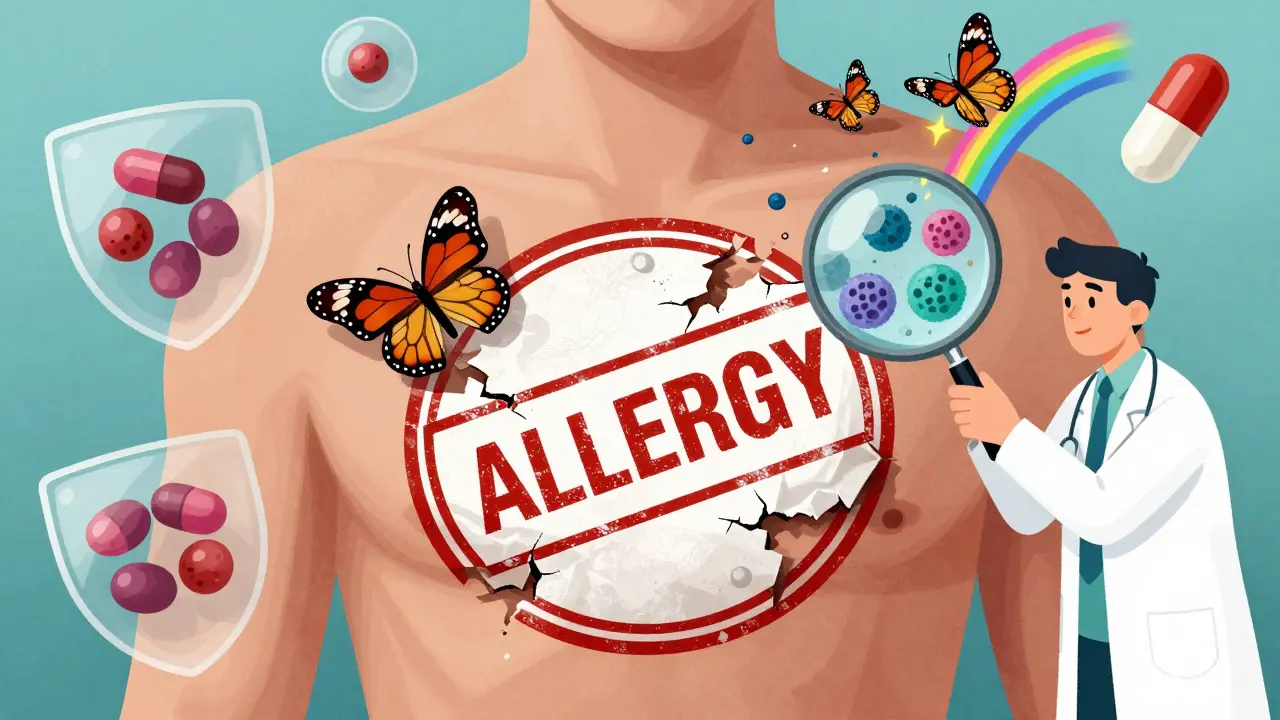
When you get itchy after an opioid like morphine, your body isn’t mounting an immune response. There’s no IgE antibody, no T-cells firing, no dangerous cascade of inflammation. Instead, the opioid directly triggers mast cells in your skin to dump histamine - the same chemical that causes hives during a pollen allergy. This is called a pseudoallergic reaction. It mimics an allergy but doesn’t involve your immune system recognizing the drug as a threat.
Studies show 70-80% of people who report an opioid allergy are actually having this kind of reaction. The itching is real, but it’s not dangerous. You won’t go into anaphylaxis from it. You won’t swell shut. You won’t stop breathing. You’ll just scratch. A lot.
This distinction matters because mislabeling someone as opioid-allergic can leave them in pain. If you’re told you can’t take morphine, oxycodone, or hydrocodone, your doctor might switch you to something less effective, more expensive, or riskier. That’s why doctors now emphasize: itching ≠ allergy.
What a True Opioid Allergy Actually Looks Like
True opioid allergies are rare - affecting only 0.1% to 0.3% of people who take them. These are immune-driven reactions, and they’re serious. Signs include:
- Hives or widespread rash
- Swelling of the lips, tongue, or throat (angioedema)
- Wheezing or trouble breathing
- Sudden drop in blood pressure
- Loss of consciousness
These symptoms usually appear within minutes of taking the drug. If you’ve ever had a reaction like this - especially after your first dose - you need to be evaluated by an allergist. This is not something to ignore or self-diagnose.
True allergies also tend to involve more than one system. Itching alone? Probably not. But itching plus swelling plus wheezing? That’s a red flag. A 2022 Mayo Clinic study found that patients with true opioid allergies almost always had symptoms beyond the skin - respiratory or cardiovascular involvement was present in every confirmed case.
Why Some Opioids Make You Itch More Than Others
Not all opioids are created equal when it comes to itching. Morphine is the worst offender. It releases 3-4 times more histamine than an equivalent dose of hydromorphone. Codeine is also a big trigger. Fentanyl? Much less likely. Methadone? Even less.
Why? It’s chemistry. Morphine and codeine have a specific molecular structure - a tertiary amine group - that directly activates mast cells. Fentanyl and methadone don’t have that same structure. That’s why switching from morphine to fentanyl often stops the itching cold.
Here’s a quick comparison:
| Opioid | Itching Incidence | Histamine Release | Best For |
|---|---|---|---|
| Morphine | 30-40% | High | Strong pain, but high itch risk |
| Codeine | 25-35% | High | Mild to moderate pain |
| Oxycodone | 20-30% | Moderate | Chronic pain |
| Fentanyl | 5-10% | Low | Post-op, cancer pain |
| Methadone | 5-10% | Very low | Long-term pain, addiction treatment |
| Hydromorphone | 10-15% | Low | High-dose pain, low itch need |
Switching opioids isn’t just about avoiding itching - it’s about getting better pain control. A 2019 study from MD Anderson found that 80% of patients who switched from morphine to fentanyl or methadone had their itching completely resolved without losing pain relief.
What to Do When You Get Itchy
If you get itchy after taking an opioid, don’t panic. Don’t assume you’re allergic. Don’t stop the medication unless you’re having trouble breathing or swelling. Here’s what actually works:
- Take an antihistamine - Diphenhydramine (Benadryl) 25-50 mg orally or IV 30 minutes before your next dose cuts itching in 85% of cases.
- Lower the dose - Reducing the opioid by 25-50% often reduces itching without losing pain control.
- Switch opioids - If itching continues, try fentanyl or methadone. They’re less likely to trigger histamine release.
- Don’t use OTC creams - Topical antihistamines or corticosteroids won’t help. The itching comes from inside your nervous system, not your skin.
For patients in palliative care, this approach is standard. A Harvard study of cancer patients found that 78% of those labeled “opioid-allergic” tolerated alternative opioids after antihistamine premedication. Only 5% had a true allergic reaction.
When You Need to See an Allergist
You should see a specialist if:
- You had swelling, breathing trouble, or low blood pressure with an opioid
- You’ve had a reaction more than once
- You’re being denied effective pain meds because of a vague allergy label
Most allergists won’t do skin tests for opioids unless you’ve had a severe reaction. Why? Because skin tests for morphine have a 30% false positive rate - meaning they often say you’re allergic when you’re not.
Instead, the gold standard is a graded challenge. Under medical supervision, you’re given a tiny dose of the opioid, then slowly increased while being monitored. If you only get itchy, not swollen or wheezing - you’re not allergic. You just need a different strategy.
One 2021 study showed that 95% of patients who underwent this process could safely use opioids again after being told they were allergic.
Why This Problem Is Bigger Than You Think
More than 200 million opioid prescriptions are written in the U.S. every year. About 10-15% of people report an opioid allergy - that’s 20 to 30 million people. But research shows over 90% of those labels are wrong.
That’s not just a medical issue. It’s an economic one. Mislabeling an opioid allergy adds about $1,200 per patient in extra costs - from more expensive drugs, longer hospital stays, and unnecessary testing. Multiply that by millions, and you’re looking at $24-36 billion wasted annually.
Hospitals are starting to fix this. Epic Systems, one of the biggest electronic health record platforms, added a feature in 2021 that prompts doctors to specify whether a reaction was itching, rash, or breathing trouble. Since then, inappropriate allergy labels have dropped by 45% across 1,200 hospitals.
What’s Next: Better Treatments on the Horizon
Researchers are working on drugs that block opioid-induced itching without blocking pain. One promising candidate is nalfurafine - approved in Japan since 2009 and now in late-stage trials in the U.S. It targets a specific nerve receptor in the spinal cord (GRPR) that causes itching, without affecting pain relief. Early results show a 70% reduction in itching.
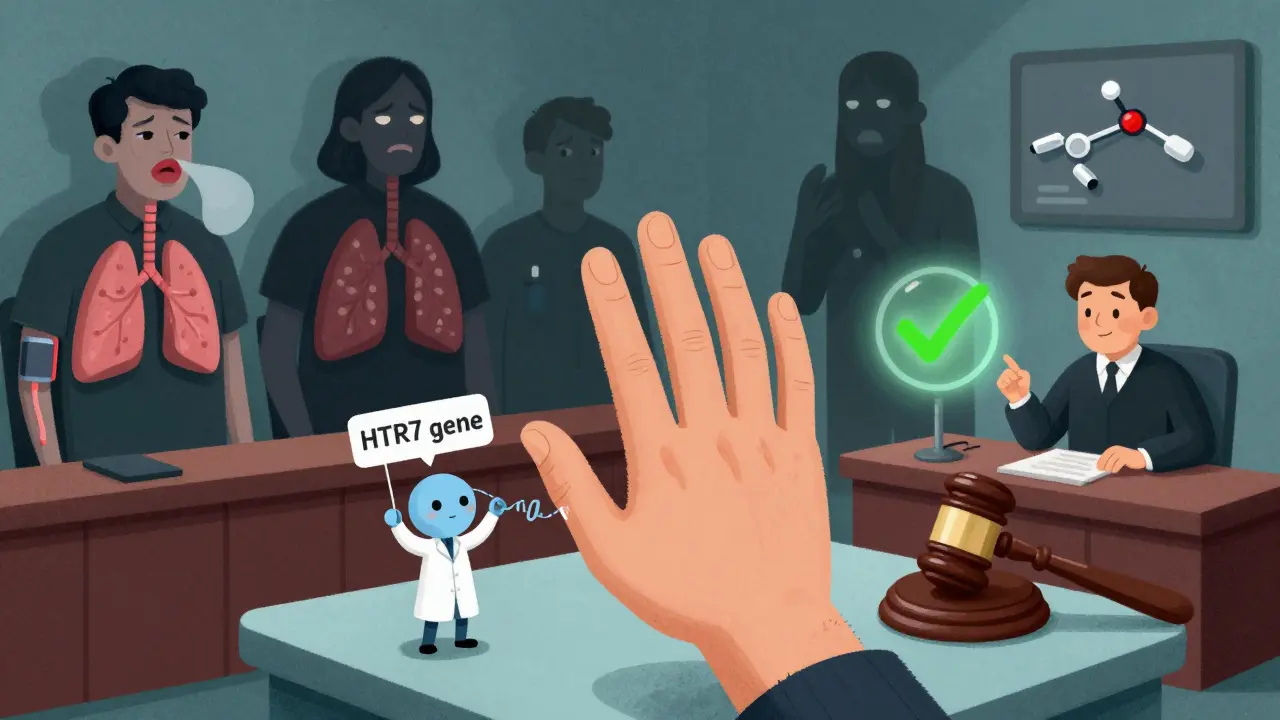
Genetic testing may also help. Scientists have found that people with certain variations in the HTR7 gene are more likely to have severe histamine release. In the future, a simple blood test could tell you if you’re at high risk for itching before you even take an opioid.
For now, though, the best tool is knowledge. If you’re itchy on morphine, you’re not allergic. You’re just reacting to the drug’s chemistry. And that’s something you can fix - without giving up pain relief.
Is opioid itching a sign of an allergy?
No, opioid itching is not a sign of a true allergy in most cases. It’s a pseudoallergic reaction caused by histamine release from mast cells, not an immune response. True allergies involve swelling, trouble breathing, or low blood pressure - not just itching.
Can I still take opioids if I get itchy?
Yes. Most people who get itchy on morphine or codeine can safely take other opioids like fentanyl or methadone. Adding an antihistamine like diphenhydramine before the dose often stops the itching. Switching opioids or lowering the dose are both effective strategies.
Which opioids cause the least itching?
Fentanyl and methadone cause significantly less itching than morphine or codeine. Their chemical structure doesn’t trigger histamine release as strongly. Hydromorphone is also a good option with lower itch risk than morphine.
Should I get tested for an opioid allergy?
Only if you had a severe reaction like swelling, breathing trouble, or low blood pressure. Skin tests for opioids are unreliable and often give false positives. A supervised dose challenge is the best way to confirm if you’re truly allergic.
Can I take Benadryl before my opioid dose?
Yes. Taking diphenhydramine (Benadryl) 25-50 mg 30 minutes before your opioid dose reduces itching in 80-90% of cases. It’s a safe, low-cost way to manage this common side effect without switching medications.
Will I become addicted if I switch opioids?
No. Switching from one opioid to another doesn’t increase addiction risk. Addiction is related to how the drug affects your brain over time, not which specific opioid you take. Fentanyl, methadone, and morphine all carry similar addiction potential when used as directed.
Comments (14)
Janette Martens
I got itchy after morphine once and they banned me from ALL opioids. Now I'm in chronic pain and they give me gabapentin like it's candy. This post is a wake-up call. 🙄
Marie-Pierre Gonzalez
Thank you for this meticulously researched and compassionate breakdown. As a nurse who has witnessed patients suffer needlessly due to mislabeled allergies, I applaud the clarity and evidence-based approach. This information could save lives.
Louis Paré
So let me get this straight-your body releases histamine because a molecule has a tertiary amine group? Wow. What a shocker. Next you'll tell me water is wet. This isn't science-it's just pharmacology with a thesaurus.
Payton Daily
OMG I’ve been saying this for YEARS. My aunt got itchy on codeine and they told her she’s allergic so now she can’t take anything and she’s in tears every night. This is insane. 😭
Kelsey Youmans
The distinction between pseudoallergic and true allergic reactions is critically undercommunicated in clinical practice. This post provides an invaluable framework for both patients and providers to reassess diagnostic assumptions with greater precision.
Debra Cagwin
If you're reading this and you've been told you're allergic to opioids because you got itchy-please don't give up. There are options. Talk to your doctor. Ask about antihistamines. Ask about switching. You deserve pain relief. You're not broken.
Ryan Touhill
Funny how Big Pharma doesn't want you to know this. Morphine is cheap. Fentanyl? Expensive. Methadone? Controlled. Who benefits when people get mislabeled allergic? Not you. Not me. But definitely the corporations.
Teresa Marzo Lostalé
I used to think itching meant something was wrong. Now I just laugh. "Oh, morphine again? Cool. I'll take my Benadryl and go nap." 🧘♀️
Sydney Lee
I find it disturbing that so many patients are being misdiagnosed. This isn't just ignorance-it's negligence. Doctors should be required to take a course on opioid pharmacology before prescribing. Period.
oluwarotimi w alaka
In Nigeria we just use tramadol and pray. No one knows what histamine is. But we know pain. And we know when someone lies to you about medicine. This post? Truth. 🇳🇬
Hakim Bachiri
Wait-so you're telling me that if I take Benadryl, I can still get high on opioids? That's... actually genius. And kinda scary. Who approved this?!
Celia McTighe
I had no idea this was so common!! I’ve been scared of opioids for years because I got itchy after a surgery. Now I feel so much less guilty about needing them. Thank you for normalizing this. ❤️
Samantha Hobbs
So... I just take Benadryl before my pain meds? Like... that's it? No big doctor visit? No blood test? Just... pills?
sonam gupta
India too. Everyone says opioid allergy. But no one knows difference between itch and swelling. Just stop medicine. No test. No help. Just pain.