
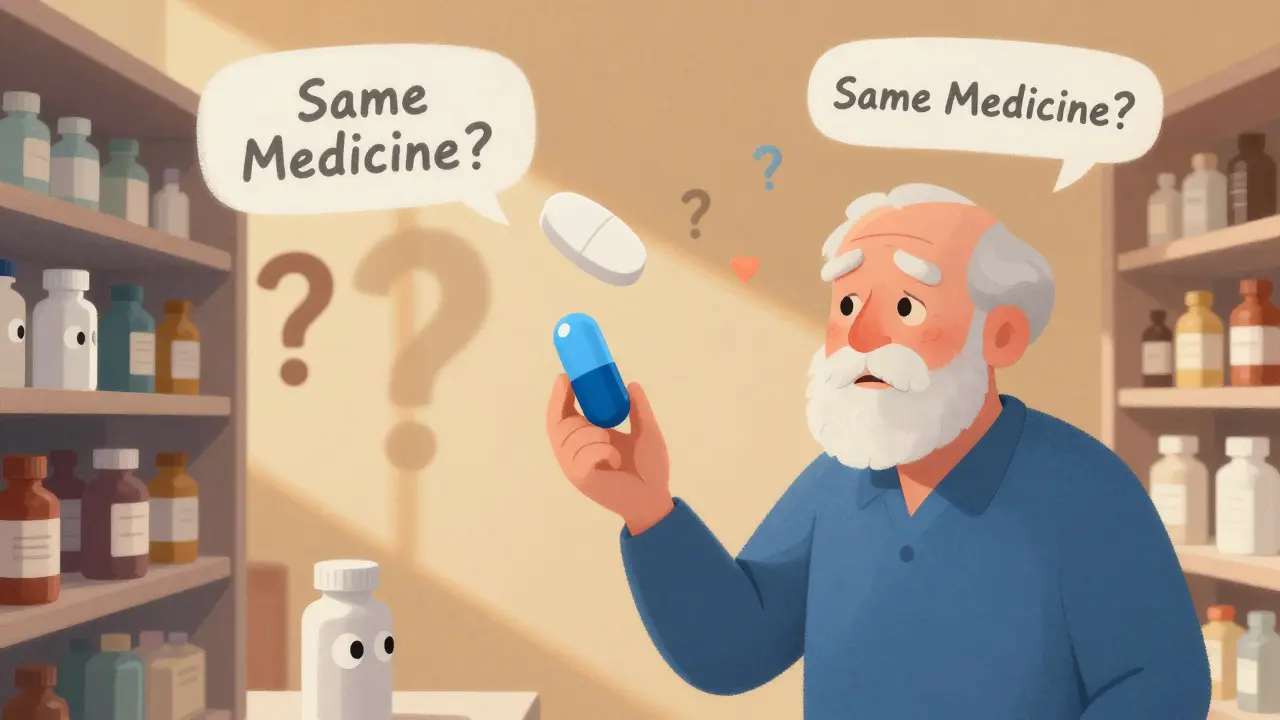
When your doctor switches your brand-name pill to a generic version, it’s not just a change in price-it’s a change in your mind. You might not realize it, but the color, shape, or even the way the bottle looks can make you doubt whether the medicine still works. And that doubt? It’s real. It’s common. And it’s costing the U.S. healthcare system over half a trillion dollars a year in avoidable hospital visits, ER trips, and worsening conditions.
Why Do People Stop Taking Their Generic Medications?
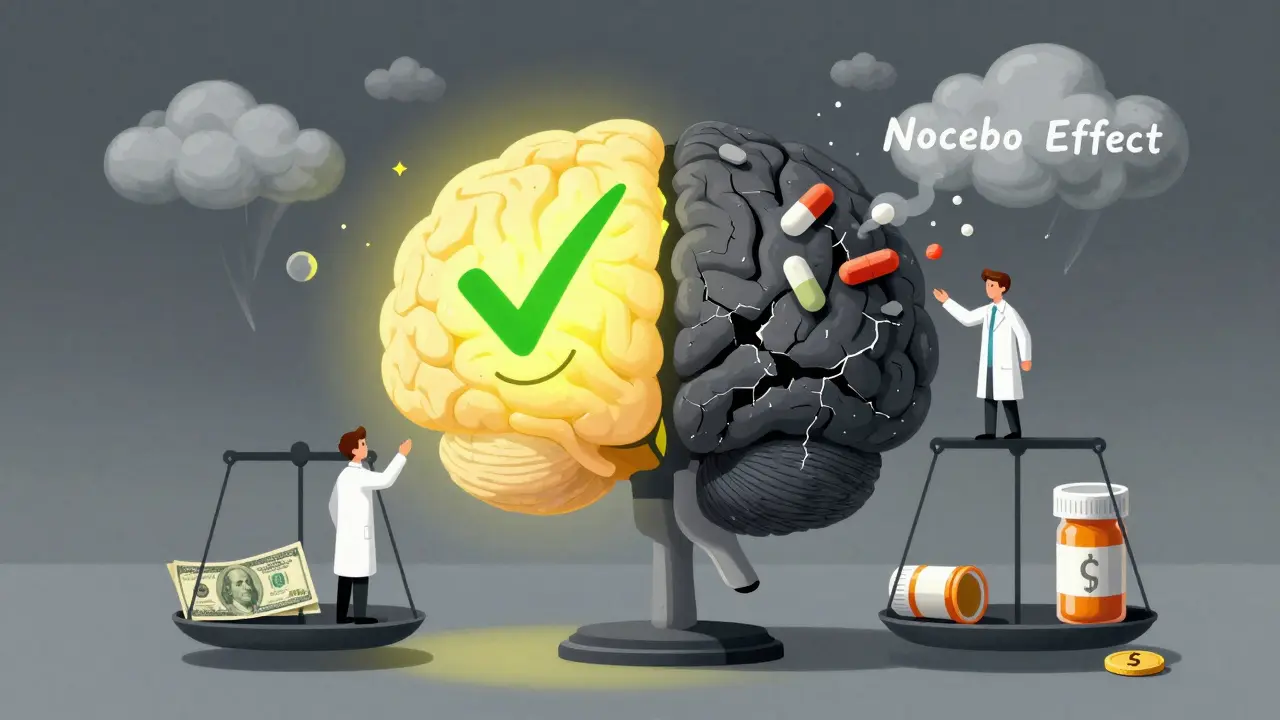
Let’s be honest: if you’ve been taking a blue capsule for years and suddenly get a white oval tablet with a different logo, your brain kicks in. Generic medication adherence isn’t about chemistry-it’s about perception. A 2018 study showed that when people were given placebo pills labeled as generics, they reported more pain, took more extra pills, and stopped taking them sooner than when given the exact same placebo labeled as a brand name. The pills were identical. The only difference? The label.
That’s the nocebo effect in action-the opposite of placebo. It’s not that the generic doesn’t work. It’s that you believe it doesn’t. And that belief changes your body’s response.
For older adults, the confusion is worse. Nearly 3 out of 10 seniors say they can’t tell their meds apart after a switch. Pill appearance changes frequently with generics. One month it’s green, the next it’s yellow. If you’re on five or six meds, that’s a recipe for skipped doses or double-dosing.
When Generic Switches Actually Cause Problems
Not all medications are created equal when it comes to switching. For drugs like levothyroxine (for thyroid), warfarin (for blood thinning), or seizure meds like lamotrigine, even tiny changes in how the body absorbs the drug can matter. A 2017 study in the New England Journal of Medicine found a small but measurable rise in hospitalizations for patients switched from brand to generic versions of these narrow therapeutic index drugs.
That doesn’t mean generics are unsafe. The FDA requires them to be within 80-125% of the brand’s absorption rate-and that same range applies to batch-to-batch differences in brand-name drugs. But for people with fragile conditions, that 20% wiggle room can feel like a gamble.
Meanwhile, in other areas, generics are winning. For statins, adherence actually goes up after switching-because the copay drops from $100 to $5. A 2018 JAMA Internal Medicine study showed a 14% increase in consistent use when cost was removed as a barrier. But for antidepressants and blood pressure meds? Adherence drops. Why? Because patients feel like they’re getting a second-rate version.
The Real Culprit: Poor Communication
Here’s the truth: 37% of adherence problems after a switch come from lack of explanation-not the drug itself.
Most patients get handed a new bottle with no conversation. Pharmacists are rushed. Doctors don’t mention it. And the patient? They’re left wondering: Is this the same? Will it make me sick? Will it stop working?
A 2022 audit found that only 28% of generic switches included even a basic explanation about bioequivalence. Only 19% asked patients if they had concerns. That’s not care-that’s transaction.
Dr. Sarah Ibrahim from the FDA says it plainly: “A generic drug must show bioequivalence to the brand-name, or reference listed drug.” But if no one tells you that, it doesn’t matter what the FDA says.
What Works: Proven Best Practices
There’s good news. When providers take the time, adherence improves-sometimes dramatically.
1. Talk before you switch. A 3.7-minute conversation makes a difference. Cover four things:
- “This generic has the same active ingredient as your old pill.”
- “The shape and color changed because it’s made by a different company-but it’s just as safe and effective.”
- “You’ll save about 80% on your copay.”
- “If you feel different after switching, call us. It’s probably not the drug-but we want to hear about it.”
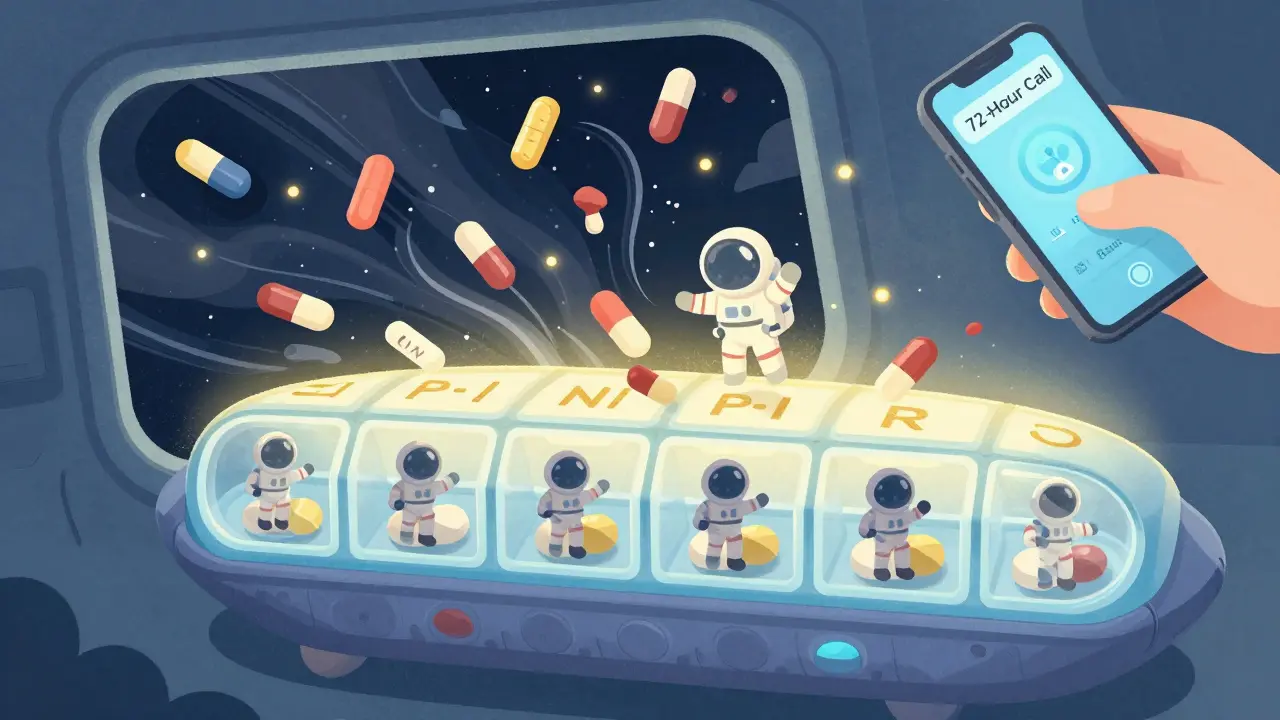
2. Use pill organizers. If you’re confused by appearances, a weekly pill box with labeled compartments helps. A 2023 Kaiser Permanente study found that 63% of patients who used organizers stayed on track after switching.
3. Ask for the same manufacturer. If you’re on a critical drug like thyroid or seizure meds, ask your pharmacist: “Can I get the same generic brand as last time?” Some manufacturers make more consistent versions. You don’t have to pay more-just ask.
4. Get a follow-up call. A 2022 meta-analysis found that patients who received a phone call from their pharmacist within 72 hours of switching were 31% more likely to keep taking their meds. That’s not magic. That’s human connection.
Technology Is Helping-But It’s Not a Fix-All
Some pharmacies now use e-prescribing systems that flag brand-to-generic switches and automatically prompt the pharmacist to counsel the patient. That’s helped boost adherence by over 22% in pilot programs.
AI tools like AiCure use your phone’s camera to verify you’re taking your pill. In a 2023 study, it improved adherence by 37% during transitions. But it doesn’t fix the fear. It just tracks it.
Medication synchronization-getting all your refills on the same day each month-also helps. When you’re not juggling 10 different refill dates, you’re less likely to miss one.
What’s Changing in 2025 and Beyond
The FDA is rolling out new rules starting January 1, 2025. Generic manufacturers will now have to include patient education materials specifically about switching from brand to generic. That’s a big step.
Also, the Generic Pharmaceutical Association is launching a “Seamless Switch” certification. Drugs that keep the same color, shape, and size during brand-to-generic transitions will get a special label. That’s targeted at seniors and people on multiple meds-exactly the group most confused by changes.
And with the Inflation Reduction Act capping Medicare out-of-pocket drug costs at $2,000 a year, cost won’t be the main driver anymore. That means perception will matter even more. If we don’t fix the fear, we’ll still lose people to nocebo effects-even when the pills are cheaper.
What You Can Do Right Now
Whether you’re a patient or a caregiver, here’s what to do the next time you’re switched to a generic:
- Don’t assume it’s weaker. Ask your pharmacist: “Is this the same as my old pill?”
- Check the pill’s appearance. Take a photo of your old pill and your new one. Compare them side by side.
- Use a pill organizer-even if you think you don’t need it.
- If you feel worse after switching, don’t just stop. Call your doctor or pharmacist. It might be a coincidence. Or it might be something they need to know.
- Ask if you can stick with the same generic manufacturer. It’s your right to ask.
And if you’re a provider? Stop assuming patients understand. Don’t just hand them a script. Talk. Listen. Follow up. That’s the difference between a prescription and a cure.
Bottom Line: It’s Not About the Drug. It’s About the Trust.
Generics are safe. They’re effective. They save billions. But they won’t work if you don’t take them. And you won’t take them if you don’t believe in them.
The gap between science and perception is wide. But it’s not unbridgeable. With clear communication, simple tools, and a little patience, we can make generic transitions work-for patients, for providers, and for the system as a whole.
It’s not about which pill you get. It’s about whether you trust you’re getting the right one.
Comments (13)
Arjun Seth
People are so weak nowadays. You can't even handle a different-shaped pill? My grandfather took whatever was in the bottle, no matter the color, and lived to 98. Stop making everything a psychological crisis.
Ayush Pareek
I get it. Switching generics can feel weird, like your body’s being lied to. But trust me - if your doctor and pharmacist say it’s bioequivalent, it is. I’ve been on generics for years, and I’ve never had an issue. Just give it a week. Your body adjusts. You got this.
Jami Reynolds
Let’s be real - the FDA doesn’t regulate generics like they do brand names. The 80-125% window? That’s a loophole big enough to drive a truck through. I’ve seen patients crash after switching. This isn’t science - it’s corporate cost-cutting disguised as progress. And now they want to slap a sticker on it and call it ‘Seamless Switch’? Please.
Frank Geurts
As someone who has lived in both India and the United States, I can tell you that the cultural perception of medication is vastly different. In India, people take whatever is available - no brand loyalty, no color obsession. Yet adherence is higher because there’s no illusion of superiority attached to the packaging. Here, we treat pills like luxury goods. The problem isn’t the drug - it’s the mythology.
Dan Mack
They’re lying to you. The generic makers use different fillers - talc, lactose, even cheap dyes that can trigger inflammation. You think your thyroid meds are the same? Think again. The FDA doesn’t test for side effects - only absorption. And that’s why hospitals are full of people who ‘just stopped feeling right’ after the switch. Wake up.
Amy Vickberg
I switched to a generic for my blood pressure med last year. I was terrified. But I followed the advice in this post - took a photo, used a pill organizer, called my pharmacist. Turns out I felt better - my headaches stopped. Turns out my fear was the problem. Thank you for the practical advice. This is what real healthcare looks like.
Nishant Garg
Let me tell you something - in my village in Bihar, people don’t know what a brand name is. They get the medicine, they take it, they live. Here in the States, we’ve turned medicine into a brand war - Nike pills vs. Adidas pills. We’ve lost touch with the fact that the active ingredient is the only thing that matters. Stop overthinking. The pill doesn’t care what color it is.
Nicholas Urmaza
Stop treating patients like children. If you’re worried about your meds, ask your doctor. Don’t wait for a pamphlet. Don’t wait for AI to track you. Take responsibility. The system won’t fix your fear - you have to. And if you’re a provider? Stop being lazy. Talk to your patients. That’s not extra work - that’s the job.
Sarah Mailloux
My grandma used to say, ‘If it looks different, it must be different.’ She’d refuse generics for years. Then I gave her a pill organizer with pictures taped to each slot. She started taking them. No drama. No fear. Just a little help. Sometimes the fix is that simple.
Nilesh Khedekar
Oh wow, so now we’re blaming the patients for being scared of pills? Brilliant. Let’s just add ‘psychological resilience’ to the prescription. Meanwhile, the same companies that make the brand-name drug also make the generic - same factory, same machine. But they charge 10x more for the blue capsule. That’s not science. That’s capitalism. And you’re the sucker paying for it.
ellen adamina
I’ve been on levothyroxine for 12 years. Switched generics three times. Each time I felt off. Not dramatically - just… off. I didn’t stop taking it, but I called my endocrinologist. We switched back to the same manufacturer. My TSH stabilized. It’s not all in my head. Sometimes the fillers matter.
Gloria Montero Puertas
It’s astonishing that anyone still believes in the FDA’s bioequivalence standards. The entire regulatory framework is a sham. The 80-125% range? That’s not science - it’s a corporate loophole. And now they want to certify ‘Seamless Switch’? As if a label can fix the fundamental corruption of the pharmaceutical supply chain. This isn’t healthcare. It’s a performance.
Tom Doan
Interesting. So the nocebo effect is real - but only when patients are informed. If they’re kept in the dark, they’re fine? That’s not a solution. That’s gaslighting. If the fear is real, then the solution isn’t to silence it - it’s to validate it, then educate. Otherwise, you’re just adding another layer of distrust.