
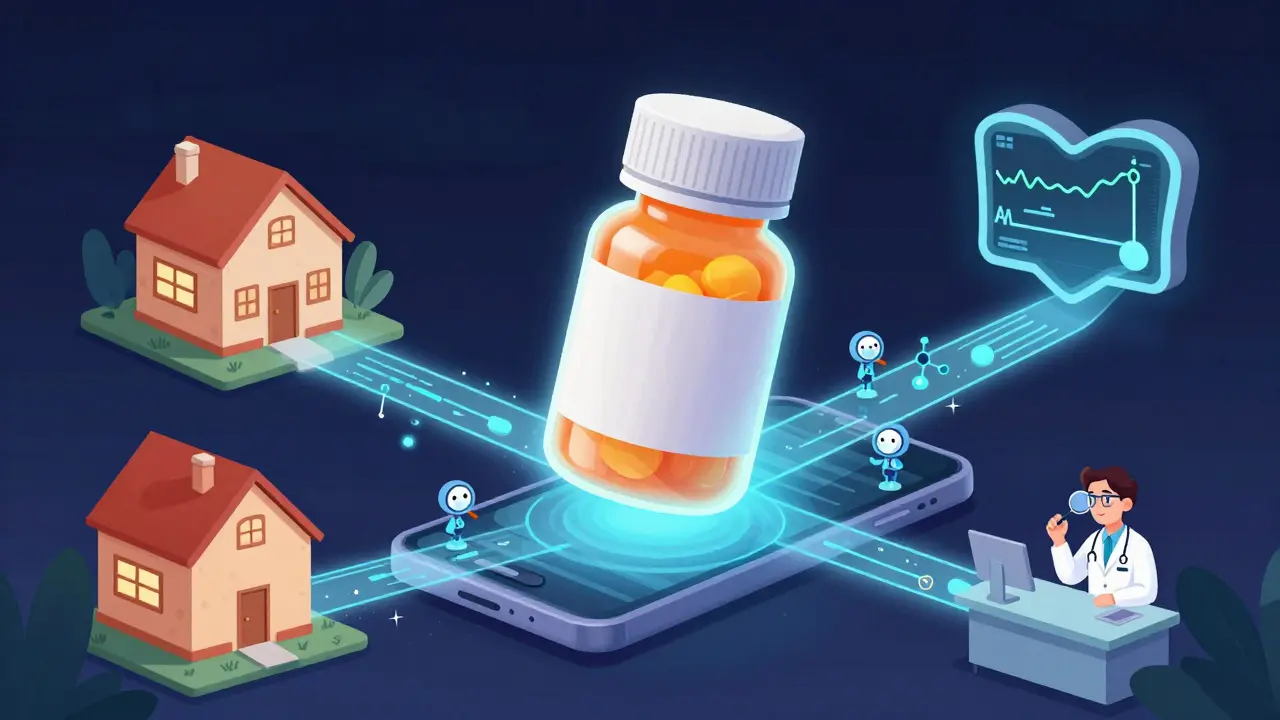
By 2026, getting your generic meds won’t mean driving to the corner pharmacy, waiting in line, and hoping your insurance covers it. It’ll mean tapping a button on your phone and having your pills delivered before lunch. The future of digital pharmacy isn’t science fiction-it’s already here, and it’s focused on one thing: making generic medications faster, cheaper, and easier to get. For millions of people managing chronic conditions like high blood pressure, diabetes, or thyroid issues, this shift isn’t just convenient-it’s life-changing.
How Digital Pharmacies Are Rewriting the Rules
Traditional pharmacies still handle most prescriptions, but digital platforms are eating into their market fast. In 2024, digital channels delivered 31.2% of all generic medications in the U.S.-up from just 18.7% in 2022. That’s not a slow climb. It’s a sprint. Companies like Truepill, CVS Health, and Amazon Pharmacy are processing tens of thousands of prescriptions daily using AI-driven systems that cut fulfillment time from 48 hours to under 5.2 hours.
What makes this possible? Three things: automation, integration, and data. These platforms connect directly to your doctor’s electronic health record (EHR), verify your insurance in seconds, and auto-fill your refill requests. No phone calls. No faxes. No missed refills because you forgot to call in. If you take a daily blood pressure pill, your digital pharmacy knows when you’re due-and sends it before you even think about it.
The savings add up fast. According to GoodRx’s 2024 report, digital generic delivery cuts medication costs by an average of 22.7% compared to retail pharmacies. For someone on a $150-a-month generic drug, that’s over $1,800 saved per year. Add in the $17.30 per prescription saved on transportation for rural patients, and the numbers get even more compelling.
AI Is the Silent Pharmacist
Behind every click and delivery is artificial intelligence-not replacing pharmacists, but giving them superpowers. AI predicts demand with 89.7% accuracy. It knows when flu season spikes in Texas, when a new diabetes diagnosis hits a neighborhood in Ohio, or when a batch of generic levothyroxine gets recalled. It flags potential drug interactions before you even get the bottle.
But the real game-changer is therapeutic equivalence. Generic drugs are supposed to work the same as brand names-but not all generics are created equal. Some have slight differences in inactive ingredients that affect absorption. AI models now analyze pharmacogenomic data (how your genes affect drug response) to recommend the *best* generic version for *you*. By 2026, 74% of digital platforms will use this kind of personalized matching, according to PwC.
Doctors and pharmacists are training for this new world. The University of Florida College of Pharmacy started mandatory AI literacy courses for all pharmacy students in 2024. They’re learning how to audit AI recommendations, spot when the algorithm gets it wrong, and explain those choices to patients. This isn’t about replacing human judgment-it’s about amplifying it.
Who’s Winning the Digital Pharmacy Race?
The market is split into three types of players:
- Integrated retailers: CVS Health (28.4% market share), Walgreens, and Walmart. They’ve got stores, insurance networks, and clinics-all tied together.
- Pure digital players: Ro, Honeybee Health, and Blink Health. They’re lean, fast, and focused on price transparency and convenience.
- Big tech: Amazon Pharmacy. With Prime delivery, Alexa integration, and massive logistics, they’re a wildcard.
CVS Health leads because they didn’t just build an app-they built a system. Their SmartDUR™ AI tool, rolled out in late 2024, checks for therapeutic equivalence in real time. If your insurance prefers one generic, but your body responds better to another, the system flags it. No more auto-substitutions that break your routine.
Amazon Pharmacy? They’re growing fast, but they still lag in clinical support. Most patients using them report getting their meds quickly-but few get follow-up counseling. That’s where the integrated players have the edge.
The Dark Side: When Tech Goes Wrong
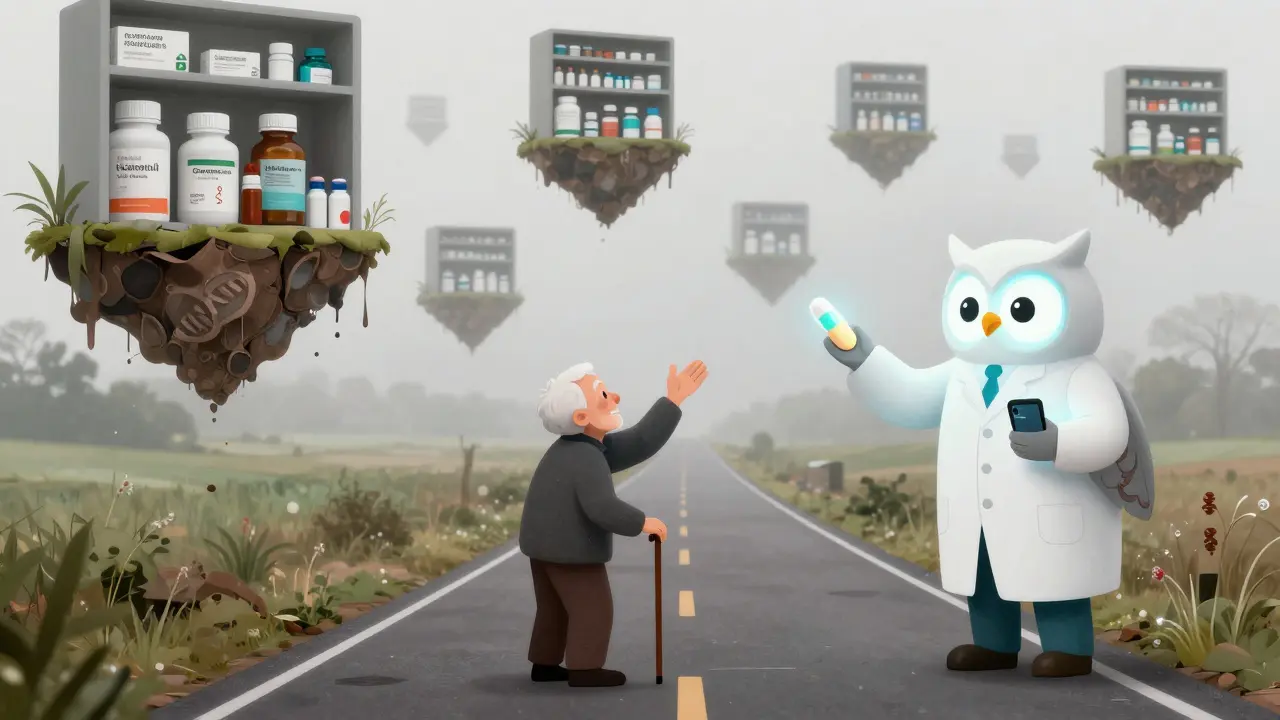
It’s not all smooth sailing. In 2023, the FDA issued a safety alert after a digital pharmacy’s AI auto-substituted a levothyroxine generic that didn’t match the patient’s previous formulation. Over 200 patients got incorrect doses. Thyroid levels went haywire. Some needed emergency care.
That’s not an isolated case. A 2023 JAMA Internal Medicine study found error rates for complex multi-drug regimens jumped to 8.7% in digital systems-nearly triple the rate of traditional pharmacies. Why? Because AI struggles with nuance. If you’re on five medications, one with a narrow therapeutic window, and another that interacts with grapefruit juice? The algorithm might miss it.
Then there’s the human factor. 24% of seniors over 65 say they can’t use digital pharmacy apps without help. And 37.8% of negative reviews on Trustpilot mention “no one to talk to.” You can’t ask a chatbot if your new generic is making you dizzy. You need a pharmacist.
Even worse: insurance coordination. One Reddit user, PharmaPatient87, shared how their digital pharmacy auto-substituted a generic their insurance didn’t cover-leaving them with a $300 bill. Insurance systems still don’t talk well to digital platforms. 18.4% of initial transactions fail because of this.
Who Benefits the Most?
The biggest winners? People in “pharmacy deserts.” That’s what the National Rural Health Association calls areas with no nearby pharmacy. Over 36 million Americans live there-mostly in rural towns or low-income urban neighborhoods. For them, digital delivery isn’t a luxury. It’s a lifeline.
Patients with chronic conditions benefit too. A CVS Health case study followed a diabetic patient who used their digital platform with integrated monitoring. Their A1C dropped by 1.8 points in six months-not because of a new drug, but because they never missed a refill, and got automatic reminders when their levels spiked.
Younger adults are leading adoption. 68.4% of people aged 18-44 use digital generic delivery. Only 22.7% of those over 65 do. That gap isn’t just about tech skills. It’s about trust. Older patients still want to see a pharmacist face-to-face. They want to hold the bottle, ask questions, and get a pat on the back.
What’s Next? The 2026 Vision
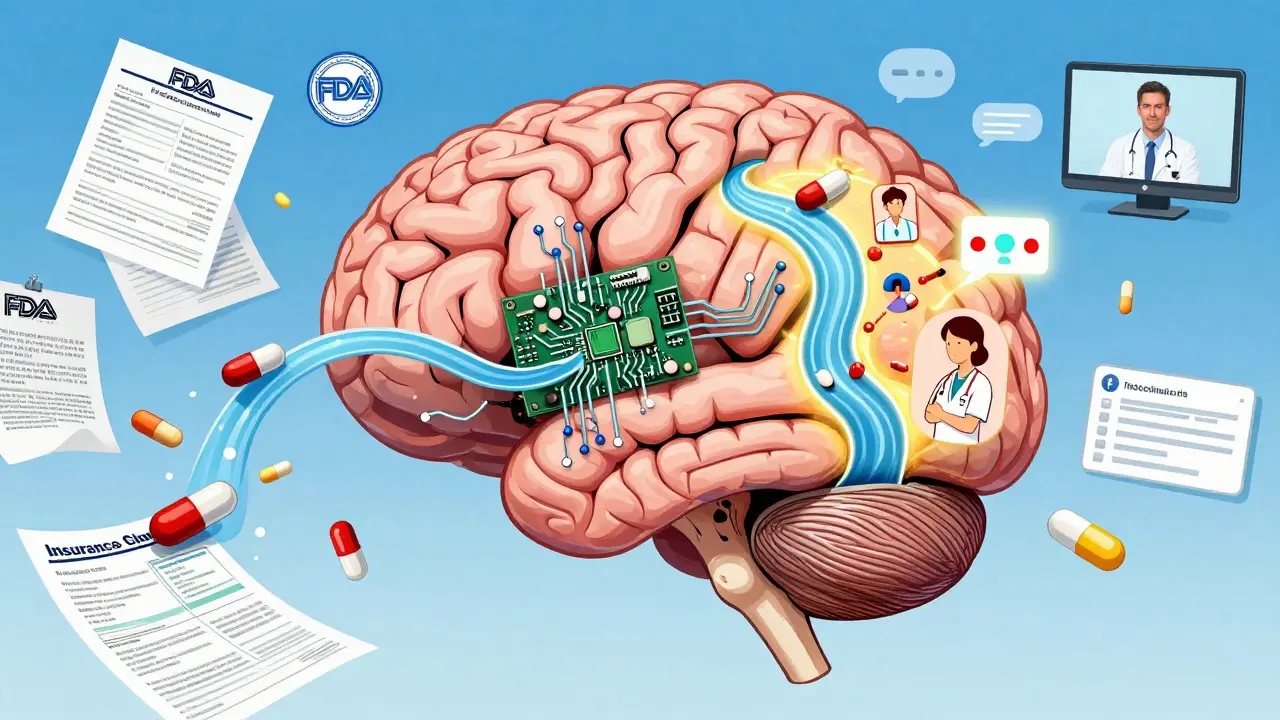
By 2026, digital pharmacy won’t just deliver pills. It’ll deliver care.
- Smart pill dispensers will sync with your app, alerting you if you miss a dose-and automatically notifying your doctor.
- AI pharmacists will handle 52.3% of prior authorizations by next year, cutting approval time from days to under 4 hours.
- Blockchain will track every generic pill from manufacturer to your door, ensuring authenticity and reducing counterfeit risks.
- Telehealth integration will let you hop on a video call with a pharmacist while you’re waiting for your refill to arrive.
Regulations are catching up, too. Seventeen states passed laws in 2024 to control how digital pharmacies substitute generics. The FDA’s Digital Health Innovation Plan now requires platforms to prove their AI systems are transparent, auditable, and safe.
But here’s the catch: the system only works if it’s designed for people-not just efficiency. The most successful platforms won’t be the ones with the fastest delivery. They’ll be the ones that remember: behind every prescription is a person who’s scared, tired, or overwhelmed.
What You Can Do Today
You don’t have to wait for 2026 to benefit. If you’re on generic meds:
- Check if your insurer partners with a digital pharmacy. Many offer free shipping and lower copays.
- Use GoodRx or SingleCare to compare prices before you order.
- Ask your pharmacist: “Is this generic equivalent to what I’ve been taking?” Don’t assume the AI got it right.
- If you’re over 65 or uncomfortable with apps, ask a family member to help set up your account-or stick with your local pharmacy.
- Report any errors. If you got the wrong dose or a pill you don’t recognize, contact the pharmacy and the FDA’s MedWatch program.
The future of digital pharmacy isn’t about replacing humans. It’s about freeing them. Pharmacists are no longer just pill counters. They’re care coordinators, data interpreters, and patient advocates. And the best digital platforms? They’re the ones that let them do that job better.
Are digital pharmacies safe for generic medications?
Yes-when used correctly. Most digital pharmacies follow strict FDA and HIPAA rules. Their systems use AES-256 encryption, real-time inventory tracking, and AI checks for drug interactions. But safety depends on oversight. AI can make mistakes, especially with complex regimens. Always review your pills when they arrive, and never skip talking to a pharmacist if something feels off.
Can I use digital pharmacy if I’m on Medicare?
Yes, but with limits. Many digital pharmacies accept Medicare Part D, but reimbursement rates dropped 8.2% in 2024. That means some platforms may not cover all generics or may charge higher shipping fees. Always check if your plan is accepted and compare out-of-pocket costs before switching.
Why do digital pharmacies sometimes substitute my generic without asking?
Insurance companies often push for the cheapest generic available. Digital platforms auto-substitute to keep costs low and speed up delivery. But not all generics are identical. If you’ve had a bad reaction to a specific brand or formulation, tell your doctor and pharmacy in writing. You can request a "do not substitute" note on your prescription.
Do digital pharmacies work for seniors?
They can, but many seniors struggle with the tech. About 24% report difficulty using apps. If you’re over 65, consider using a family member’s device, calling customer service for help, or sticking with your local pharmacy for now. Some platforms, like CVS, offer phone-based ordering and free delivery-no app needed.
How do I know if a digital pharmacy is legitimate?
Look for VIPPS certification (Verified Internet Pharmacy Practice Sites) from the National Association of Boards of Pharmacy. Avoid sites that sell without a prescription, offer drugs at suspiciously low prices, or don’t list a physical address or licensed pharmacist. Legit platforms will require a valid prescription and show you their pharmacy license.
Will digital pharmacies replace physical pharmacies?
No-not entirely. While digital channels will handle most routine generic refills, physical pharmacies will still be vital for complex cases, emergency refills, immunizations, and in-person counseling. The future is hybrid: digital for convenience, brick-and-mortar for care.
Final Thought: It’s Not About Tech-It’s About Trust
The biggest barrier to digital pharmacy adoption isn’t speed, cost, or even tech. It’s trust. People need to know the system won’t mess up their meds. They need to know someone’s watching. The companies that win won’t be the ones with the fanciest AI. They’ll be the ones who make it clear: technology serves you. Not the other way around.
Comments (12)
vishnu priyanka
Man, in India we’re still waiting for pharmacies to stop giving us expired pills. But this digital shift? Could be a game-changer for folks in villages where the nearest pharmacy is 50km away. Just hope they don’t start sending meds in plastic bags with no labels.
Alan Lin
While the efficiency gains are statistically significant, the underlying assumption-that algorithmic substitution is clinically equivalent to human pharmacist oversight-is dangerously reductive. The FDA’s 2023 alert on levothyroxine mis-substitutions is not an anomaly; it is a systemic failure of risk mitigation protocols. We are outsourcing clinical judgment to probabilistic models trained on incomplete pharmacogenomic datasets. This is not innovation. It is institutionalized negligence.
John Pope
Let’s be real-AI doesn’t care if your grandma needs to hold the bottle and cry a little while the pharmacist tells her it’s gonna be okay. This whole thing feels like Amazon turning healthcare into a Prime delivery box. You get your pills faster, sure, but you lose the person who remembers your name, your dog’s name, and that you hate grapefruit juice. That’s not progress. That’s dehumanization with a QR code.
And don’t even get me started on how these platforms auto-substitute generics like they’re swapping out coffee creamers. My cousin got a different formulation of metformin and spent three weeks in a fog. No one called. No one apologized. Just a ‘refill scheduled’ notification.
Meanwhile, CVS’s SmartDUR™? Cute. But if the algorithm flags a drug interaction but the pharmacist is overworked and just clicks ‘approve’ because they’ve got 17 more scripts to process… who’s really in charge here? The AI? Or the burnt-out human who’s just trying to make it to lunch?
Adam Vella
The premise of this article fundamentally misunderstands the nature of therapeutic equivalence. Generic medications are bioequivalent under controlled conditions, but real-world pharmacokinetics are influenced by gastrointestinal pH, gut microbiota, and individual metabolic polymorphisms-factors not captured by current AI models. The claim that 74% of platforms will use pharmacogenomic personalization by 2026 is speculative at best. The FDA’s current guidance does not mandate such granularity, and the cost of genomic sequencing remains prohibitive for mass-scale deployment.
Furthermore, the assertion that AI improves adherence is contradicted by JAMA’s findings on error rates in multi-drug regimens. The algorithmic complexity required to accurately model polypharmacy interactions exceeds the computational capacity of most current systems. This is not a technological advancement; it is a marketing narrative.
Nelly Oruko
so… like… i got my blood pressure meds delivered last week and they looked different. i was scared. but then i called the pharmacy and the lady on the phone was so nice she walked me through it. turns out it was the same drug, just a different maker. she even asked if i was sleeping okay. that’s the part no app can replace.
Lance Nickie
Wait, so you’re telling me a robot can deliver my pills faster than my local pharmacy? Newsflash: I’ve never waited more than 10 minutes. And my pharmacist knows I take my meds with coffee. Your ‘AI pharmacist’ doesn’t even know I exist.
sam abas
Look, I’ve been using digital pharmacies since 2022 and I’m not mad, but I’m not impressed either. The system’s great until it’s not. I once got a 90-day supply of levothyroxine with a different filler that made me feel like I was being slowly poisoned. Took me three weeks to figure out it wasn’t my anxiety-it was the generic. The app didn’t warn me. The pharmacy didn’t call. The insurance company said ‘it’s bioequivalent.’ Bioequivalent? My thyroid says otherwise. Now I print out every bottle’s lot number and cross-check it with the FDA’s database. It’s exhausting. And this article makes it sound like it’s all rainbows and free shipping. It’s not. It’s a minefield with a slick UI.
And don’t even get me started on the ‘telehealth pharmacist’ thing. I had a 3-minute video call with someone who read from a script. They didn’t ask me how I felt. They didn’t ask if I was having side effects. They just said, ‘Your refill is on the way.’ Thanks, Skynet.
The real problem? We’re treating medication like a subscription service. But your body isn’t Netflix. You can’t just ‘skip’ a bad batch and move on. People die from this stuff. And the companies? They just update their terms of service.
Priyanka Kumari
As someone from rural India, I’ve seen what happens when people can’t access meds. My aunt missed her diabetes pills for 11 days because the nearest pharmacy was closed during monsoon season. Digital delivery could save lives here-not because it’s fancy, but because it’s reliable. I hope these platforms partner with local community workers to help elders use the apps. Tech is only as good as the hands that hold it.
Avneet Singh
The entire premise is a neoliberal fantasy disguised as innovation. You’re glorifying corporate logistics under the banner of ‘patient care.’ The real issue isn’t delivery speed-it’s the commodification of health. Generic drugs were meant to democratize access, not become profit vectors for venture-backed startups with zero clinical accountability. The AI ‘personalization’ is just a veneer for dynamic pricing algorithms that prioritize margin over safety. This isn’t healthcare. It’s supply chain optimization with a stethoscope logo.
Trevor Whipple
lol at people acting like digital pharmacies are gonna replace pharmacists. nah. they’re just replacing the guy who used to hand you your pills with a chatbot that says ‘your meds are on the way’ and then ghosts you when you ask if the new generic is gonna make you vomit.
Lethabo Phalafala
I live in Cape Town and my mom’s on seven meds. Last month, her digital pharmacy sent her the wrong version of her blood thinner. She didn’t know until she started bleeding from her gums. We had to rush her to the ER. The app had no way to call her. No one called us. Just a notification that said ‘Refill completed.’ That’s not convenience. That’s a death sentence wrapped in a Prime package.
They talk about AI and blockchain like it’s magic. But magic doesn’t hold your hand when you’re scared. Magic doesn’t say, ‘I’m here, let’s figure this out.’ Real people do. And until these companies remember that, they’re not healing anyone. They’re just shipping pills.
Milla Masliy
My grandma still calls the pharmacy every time she needs a refill. She says she likes hearing the voice on the other end. I get it. I used to think digital was the future-until I saw how lonely she gets when she’s alone with her meds and no one to ask if she’s okay. Maybe the real innovation isn’t faster delivery. It’s building systems that remember: people aren’t orders. They’re humans.