
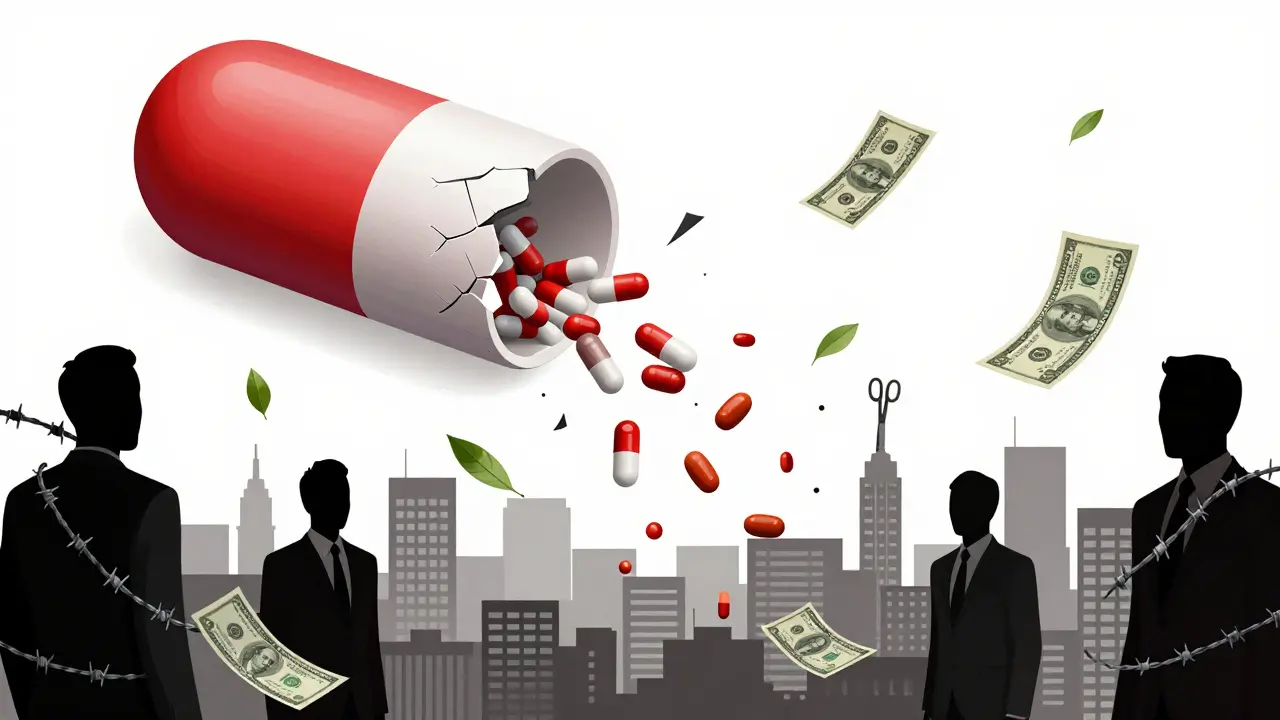
When a drug’s patent expires, it doesn’t just change who can make it-it changes how much you pay for it. That’s the moment when a medicine goes from being a monopoly product to something anyone can copy. And that’s when prices start to fall-sometimes dramatically. In the U.S., a brand-name drug like Eliquis (apixaban) cost patients $850 a month before its patent expired in 2020. After generics hit the market, the same dose dropped to $10. That’s not an outlier. It’s the rule.
Why patents matter-and why they expire
Patents give drug companies exclusive rights to sell a medicine for 20 years from the date of filing. But that’s not the full story. Most drugs take 10-12 years to develop and get approved by the FDA. That means companies often have only 8-12 years of actual market exclusivity before generics can enter. To protect their profits, many companies file dozens of secondary patents on minor changes-like a new pill coating, a different dosage form, or a slightly altered delivery system. These aren’t new drugs. They’re legal tricks. In fact, 78% of new patents filed for top-selling drugs between 2010 and 2023 were for existing products, not breakthroughs. This practice, called "evergreening," delays generic competition by years.
The Hatch-Waxman Act of 1984 was designed to fix this imbalance. It created a faster, cheaper path for generic manufacturers to get approval, as long as they prove their version works the same as the brand-name drug. In return, the original company gets a short extension on its patent to make up for time lost during FDA review. The system was meant to balance innovation with affordability. But over time, the balance tipped.
How prices drop after patent expiration
Price drops don’t happen all at once. They follow a pattern. The first generic company to enter usually cuts the price by 15-20%. That’s a big deal, but not earth-shattering. The real drop comes when the second, third, and fifth generics arrive. By the time 10 or more companies are selling the same drug, prices often fall by 80-90%.
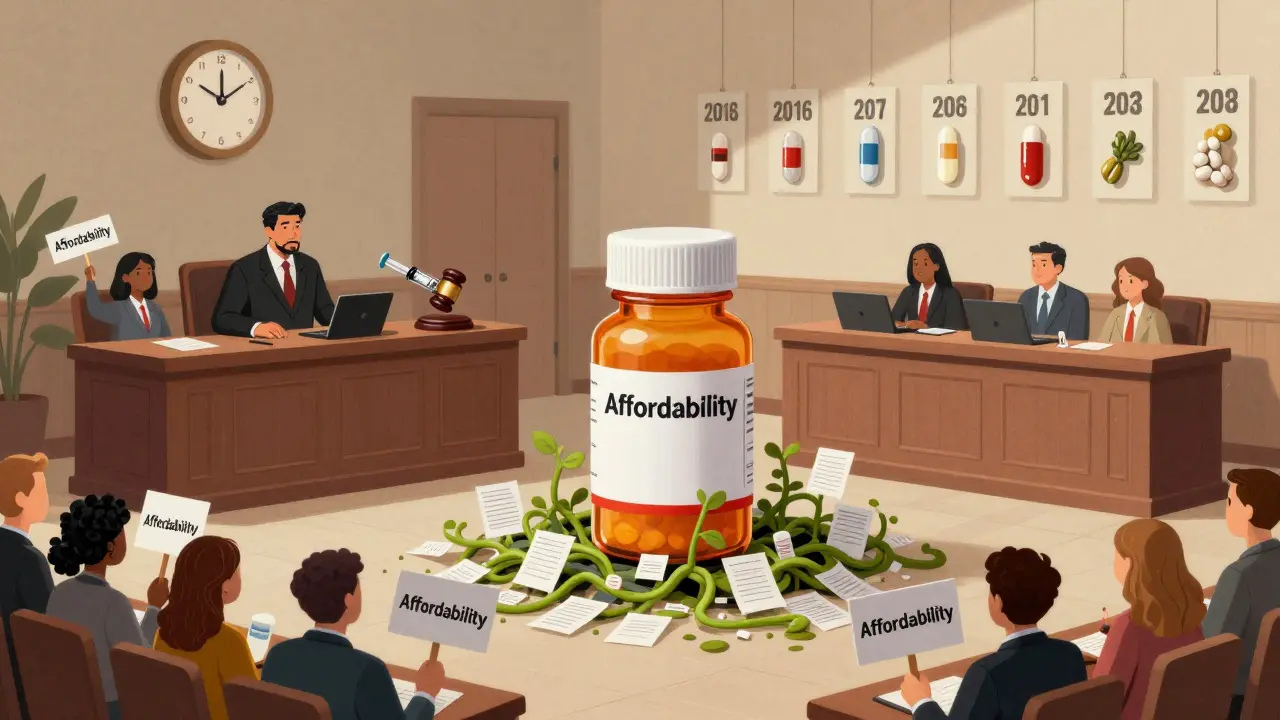
Take Humira (adalimumab). Its main patent expired in 2016. But AbbVie filed over 130 secondary patents. It wasn’t until January 2023-seven years later-that the first biosimilar, Amjevita, hit the market. Even then, prices didn’t crash right away. Why? Because AbbVie signed secret deals with insurers and pharmacy benefit managers, locking in rebates that kept the original drug on formularies. Patients didn’t see savings until more biosimilars entered-by late 2023, nearly a dozen were available. Only then did prices begin to tumble.
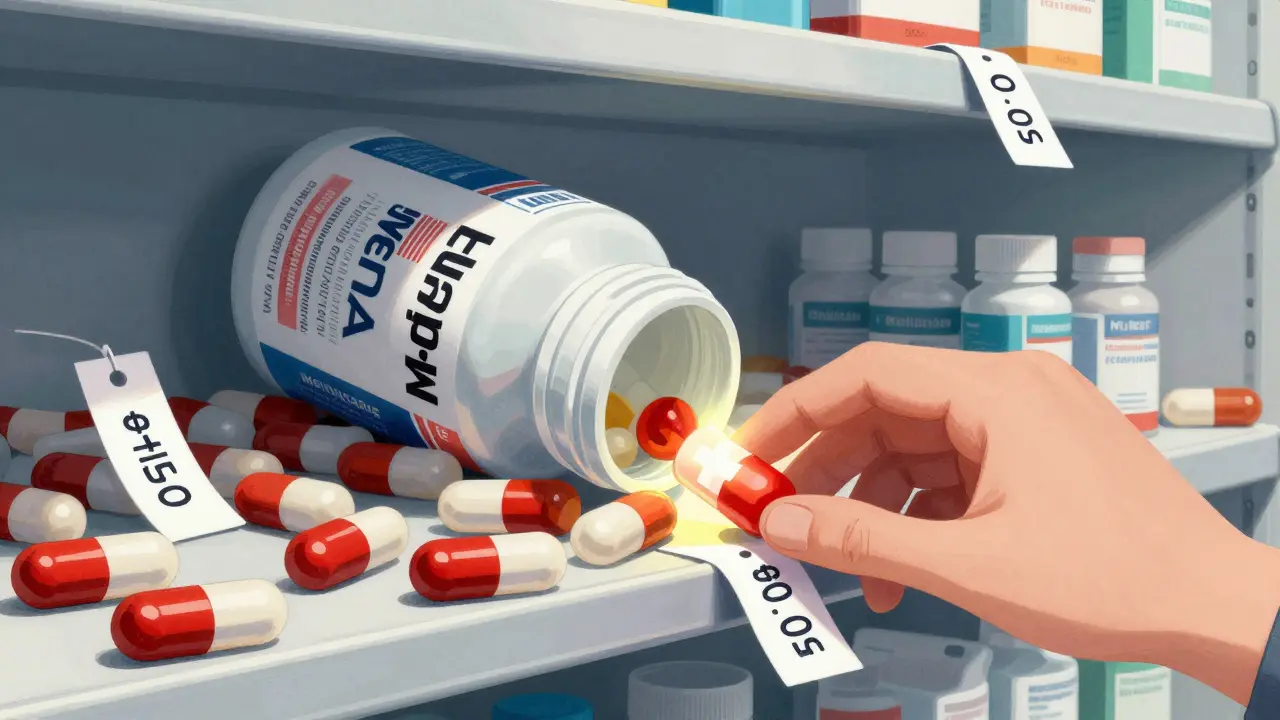
Compare that to the U.S. market for generic atorvastatin (Lipitor). After its patent expired in 2011, over 100 companies jumped in. Within two years, the price per pill dropped from $4.50 to $0.05. That’s a 99% decline. The more competitors, the faster the race to the bottom.
International differences: Why prices drop faster in some countries
Not all countries play by the same rules. A 2023 study of 505 drugs across eight wealthy nations showed huge differences in price drops after patent expiration:
- United States: 82% drop over 8 years
- United Kingdom: 60%
- Australia: 64%
- Germany: 58%
- France: 53%
- Canada: 48%
- Japan: 42%
- Switzerland: just 18%
Why the gap? It’s about how governments control prices. In the U.S., insurers negotiate individually. That means big buyers like CVS or UnitedHealth can push for discounts, but smaller ones can’t. In Europe, governments set price caps. Germany and France use reference pricing-they look at what other countries pay and match it. That forces manufacturers to lower prices to stay competitive. Switzerland, by contrast, lets companies set their own prices and only steps in if costs become "excessive." That’s why prices there barely budged.
Another factor: speed of generic entry. In the U.S., generics typically arrive 30 months after patent expiry. In Europe, it’s 12-18 months. That extra time lets brand-name companies milk profits longer.
The rise of biosimilars and why they’re different
Not all drugs are created equal. Small-molecule pills like Lipitor or Eliquis are easy to copy. Their chemical structure is simple. But biologics-drugs made from living cells like Humira, Enbrel, or Ozempic-are far more complex. You can’t just reverse-engineer them. That’s why copycats are called "biosimilars," not generics. They’re similar, but not identical.
Getting a biosimilar approved takes longer and costs more-often $2-5 million per product. That’s why fewer companies enter this space. It also means price drops are slower. Even after the first biosimilar launched for Humira in 2023, it took a year for prices to fall 30%. By comparison, generic pills often drop 80% within 12 months.
And here’s the catch: even when biosimilars are approved, they don’t always get prescribed. Doctors are often hesitant. Pharmacies may not stock them. Insurers may still favor the original drug because of rebates. So while the patent expired, the market didn’t fully open.
Who wins-and who loses-when patents expire
Patients win. Insurers win. Taxpayers win. In the U.S., the Congressional Budget Office estimates that generic and biosimilar competition will save the healthcare system $1.7 trillion over the next decade.
But the original drugmakers? They lose market share-but not always revenue. Many of them now own generic divisions. Pfizer, Novartis, and Johnson & Johnson all have big generic businesses. So when a patent expires, they may sell the brand-name drug for a while, then switch to making the generic version themselves. That’s how they stay profitable.
Pharmacists win too. Generic substitution is legal in 49 U.S. states. If a prescription says "dispense as written," they can’t swap it. But if it doesn’t, they can give the cheaper version-and patients usually don’t even notice.
But patients still lose when:
- Insurance formularies delay switching to generics
- Rebates keep the brand-name drug on the preferred list
- Complex drugs like semaglutide (Ozempic) are protected by 142 patents, delaying generics until 2036
That’s not competition. That’s a legal barrier.
What’s changing-and what’s next
Regulators are starting to push back. In 2023, the U.S. Patent Office cracked down on "patent thickets," rejecting dozens of low-quality patents on existing drugs. The European Commission proposed limiting how long companies can extend protection through supplementary certificates. The FDA approved 870 generic drugs in 2023-a 12% jump from 2022-and is prioritizing approvals for complex generics.
Meanwhile, Medicare’s new drug price negotiation program is forcing manufacturers to think twice. If a drug is going to be negotiated down to a low price, why wait for generics? Some companies are now pulling their brand-name drugs from the market early, letting generics take over before Medicare steps in.
The future? More biosimilars. More generics. But also more legal games. The biggest threat isn’t the patent expiring-it’s what happens after. If the system doesn’t change, the savings will be delayed. Patients will keep paying high prices. And the promise of competition? It’ll remain just a promise.
What you can do
If you’re on a brand-name drug with an expiring patent, ask your doctor or pharmacist: "Is there a generic or biosimilar available?" Don’t assume your insurance will switch you automatically. Sometimes, you have to ask.
Check your formulary. If your drug isn’t covered-or it’s on a high tier-call your insurer. Ask why. Sometimes, a simple appeal gets you switched to the cheaper version.
And if you’re paying over $100 a month for a drug that’s been off-patent for more than two years, you’re likely overpaying. That’s not normal. That’s a system glitch.
Patent expiration isn’t magic. It’s economics. When competition arrives, prices fall. But only if the system lets it.
What happens to drug prices when a patent expires?
When a drug’s patent expires, generic manufacturers can legally produce and sell the same medicine. The first generic typically cuts the price by 15-20%. With each additional competitor, prices drop further-often by 80-90% within 3-5 years. The more companies that enter, the faster and deeper the price decline.
Why do some drugs stay expensive after patent expiration?
Companies use tactics like "patent thickets"-filing dozens of secondary patents on minor changes-to delay generic entry. They also strike secret deals with insurers and pharmacy benefit managers, offering rebates that keep the brand-name drug on preferred lists. This keeps prices high even when generics are available. Biosimilars face similar delays due to complex approval rules and slow adoption by doctors.
Are generic drugs as safe and effective as brand-name drugs?
Yes. The FDA requires generics to have the same active ingredient, strength, dosage form, and route of administration as the brand-name drug. They must also prove they’re bioequivalent-meaning they work the same way in the body. Over 90% of prescriptions in the U.S. are now filled with generics, and they’re used safely every day.
How long does it take for generics to appear after a patent expires?
In the U.S., generics usually enter the market 30 months after patent expiry, due to legal challenges and regulatory delays. In Europe, it’s often 12-18 months. For complex drugs like biosimilars, the wait can be 4-7 years because of higher approval costs and legal "patent dances" between companies.
Can I ask my pharmacist to switch me to a generic?
Yes, in 49 U.S. states, pharmacists can substitute a generic for a brand-name drug unless the prescription says "dispense as written." Even then, you can ask your doctor to change the note. Many patients don’t realize they have this option-and it can save hundreds a month.
What’s the difference between a generic and a biosimilar?
Generics are exact copies of small-molecule pills, like aspirin or atorvastatin. Biosimilars are highly similar versions of complex biologic drugs, like Humira or insulin. They’re not identical because biologics are made from living cells, not chemicals. Biosimilars take longer to approve, cost more to make, and face slower adoption-so their price drops are usually smaller and slower than generics.
Why do drug companies file so many patents on one drug?
It’s called "evergreening." Companies file patents on small changes-like a new coating, a different pill shape, or a new dosage schedule-to extend their monopoly. The I-MAK 2025 report found that the average blockbuster drug gets 10-15 secondary patents, delaying generic competition by 12-14 years beyond the original patent term. This isn’t innovation-it’s legal strategy.
Will Medicare’s new drug pricing rules affect patent expiration?
Yes. Under the Inflation Reduction Act, Medicare can now negotiate prices for 10 high-cost drugs each year. Some manufacturers are responding by pulling drugs off the market early, letting generics take over before negotiation kicks in. This could speed up the transition to lower-cost alternatives-but only if patients and providers can access them.
Comments (11)
Joie Cregin
Man, I remember when my mom had to pay $700 a month for her blood thinner and we just cried over the bill. Then generics hit and it was like $12. We thought it was a mistake. Like, is this even the same drug? But it worked just fine. People need to know this isn’t magic-it’s just capitalism finally letting go.
Rob Deneke
So many people dont get that the system is rigged and its not just about patents its about who controls the money flow. Big pharma doesnt care if you live or die they care if you keep paying. And the worst part? Theyre the ones writing the rules.
Chelsea Harton
Evergreening is just corporate gaslighting
waneta rozwan
Oh sweetie. You think this is about fairness? No. This is about power. The FDA? The patent office? The insurers? All cozy with Big Pharma. You think they want generics to win? They get kickbacks. They get stock options. They get vacations in the Hamptons while you choose between insulin and rent. Wake up.
Jody Fahrenkrug
I’ve switched to generics for everything except my antidepressant. My doctor said it’s fine but I still double check the pill shape every time. Weird how something so small can make you feel insecure about your health. But hey, I saved $200 a month. That’s a lot of coffee.
Kasey Summerer
So let me get this straight… we have a system where a company can patent the color of a pill and then charge $800 for it… and then when it finally expires… we act surprised? 😂👏👏👏
Travis Craw
kinda funny how the same people who scream about free markets are the ones defending pharma’s monopoly. like if you’re gonna believe in competition then let it happen. dont cry when the price drops. you wanted a free market right? here it is.
Christina Bilotti
Oh look another person who thinks generics are ‘just as good.’ Tell that to the 3% of patients who have adverse reactions to fillers in generics. Oh wait you can’t because you don’t read the tiny print. Or maybe you just don’t care enough to look up the bioequivalence studies. Typical.
brooke wright
Wait so if my insurance won’t switch me to the generic even though it’s been 3 years since the patent expired… is that illegal? Like can I sue? Or is this just how it is? I’m on a fixed income and I’m paying $140 for something that costs $8 at Walmart. I feel like I’m being robbed and no one cares.
vivek kumar
In India, we have generics for almost everything. Eliquis? Rs 300 a month. Humira? Rs 12,000 a month instead of $2000. We don’t have patent thickets here. We have people who need medicine. Big pharma hates us because we make drugs affordable. But we don’t care. We’re not a market. We’re a population. And you can’t price humans out of survival.
Nick Cole
My dad was on Humira for 10 years. When the biosimilar came out, his doctor didn’t even mention it. We had to find it ourselves. Then the pharmacy wouldn’t stock it. Then the insurer made us jump through 7 hoops just to switch. This isn’t about science. It’s about inertia. And laziness. And corporate greed wrapped in a white coat.