
Thyroid Medication & Ashwagandha Risk Calculator
Understanding the Risk
Taking ashwagandha with thyroid medication can increase your thyroid hormone levels. This calculator estimates potential changes based on clinical study data. If your levels become too high, you may experience symptoms of hyperthyroidism including rapid heartbeat, anxiety, insomnia, and weight loss.
Every year, millions of people take ashwagandha to manage stress, improve sleep, or boost energy. But if you're on thyroid medication like levothyroxine (Synthroid), this popular herb could be quietly pushing your hormone levels into dangerous territory. It’s not a myth. It’s not speculation. It’s happening - and many people don’t even know it until they’re in the emergency room with a racing heart or shaking hands.
Ashwagandha, an ancient herb used in Ayurvedic medicine for over 3,000 years, is now one of the most sold supplements in the U.S. and Europe. In 2022, global sales hit $1.1 billion. But behind the calming claims lies a powerful effect on your thyroid - and that’s where things get risky.
How Ashwagandha Changes Thyroid Hormone Levels
Ashwagandha doesn’t just relax you. It directly stimulates your thyroid gland. Research from a 2018 double-blind study published in the Journal of Alternative and Complementary Medicine showed that people with subclinical hypothyroidism who took 600 mg of standardized ashwagandha daily for eight weeks saw their thyroid hormone levels rise sharply:
- Thyroid-stimulating hormone (TSH) increased by 17.5%
- Triiodothyronine (T3) jumped by 41.5%
- Thyroxine (T4) rose by 19.6%
That’s not a minor bump. That’s a significant hormonal shift. For someone already taking levothyroxine to replace missing thyroid hormone, this is like adding another dose - without the doctor’s knowledge.
The active compounds in ashwagandha, called withanolides (especially withaferin A and withanolide D), appear to trigger the hypothalamic-pituitary-thyroid (HPT) axis. In simple terms, your brain thinks your thyroid needs to work harder - so it signals your thyroid to produce more hormone. If you’re already on medication, your body ends up with too much.
Why This Is Dangerous: The Over-Replacement Trap
Thyroid medication is one of the most precisely dosed drugs in medicine. A single pill might contain 25, 50, 75, or 100 micrograms of levothyroxine - enough to keep your TSH between 0.4 and 4.0 mIU/L. Too little, and you feel tired, cold, and heavy. Too much, and you get symptoms of hyperthyroidism: rapid heartbeat, anxiety, insomnia, weight loss, tremors, and even heart rhythm problems.
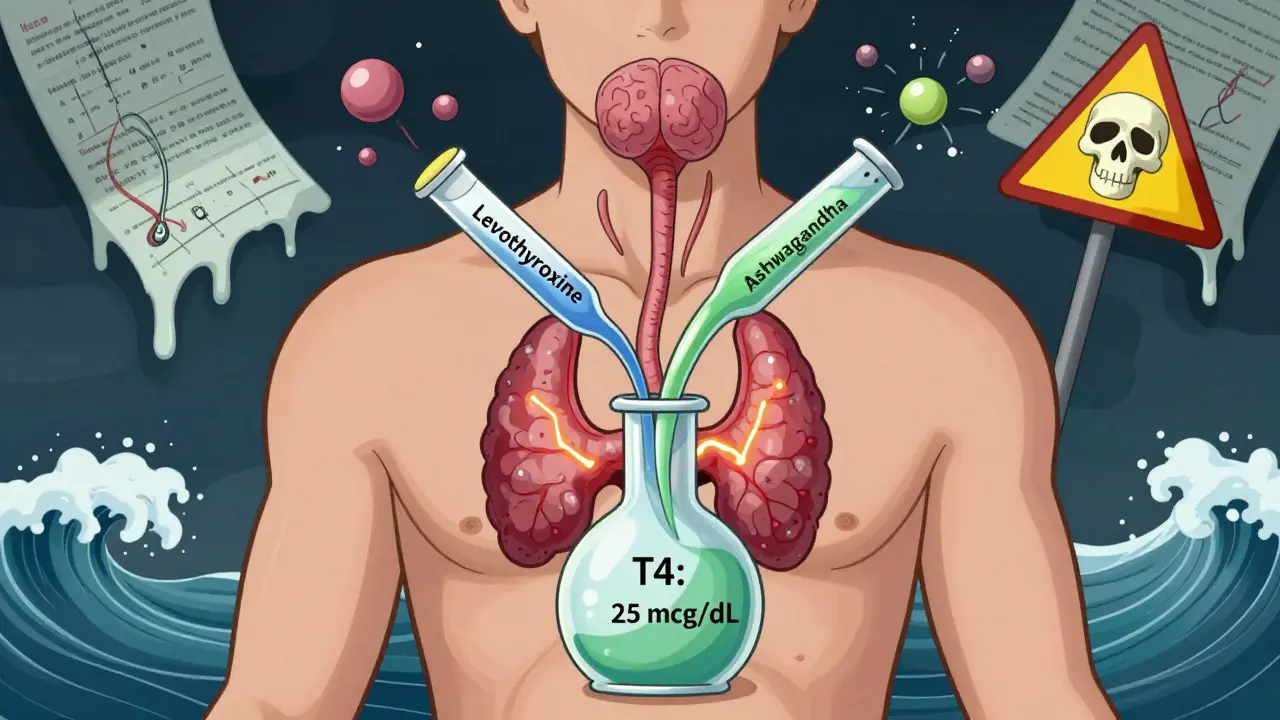
The American Association of Clinical Endocrinologists (AACE) documented 12 cases of thyrotoxicosis - dangerously high thyroid hormone levels - directly linked to ashwagandha use in people on thyroid medication. In these cases, T4 levels soared above 25 mcg/dL. The normal range? 4.5 to 12.0 mcg/dL. TSH dropped below 0.01 mIU/L. That’s not just abnormal. That’s a medical emergency.
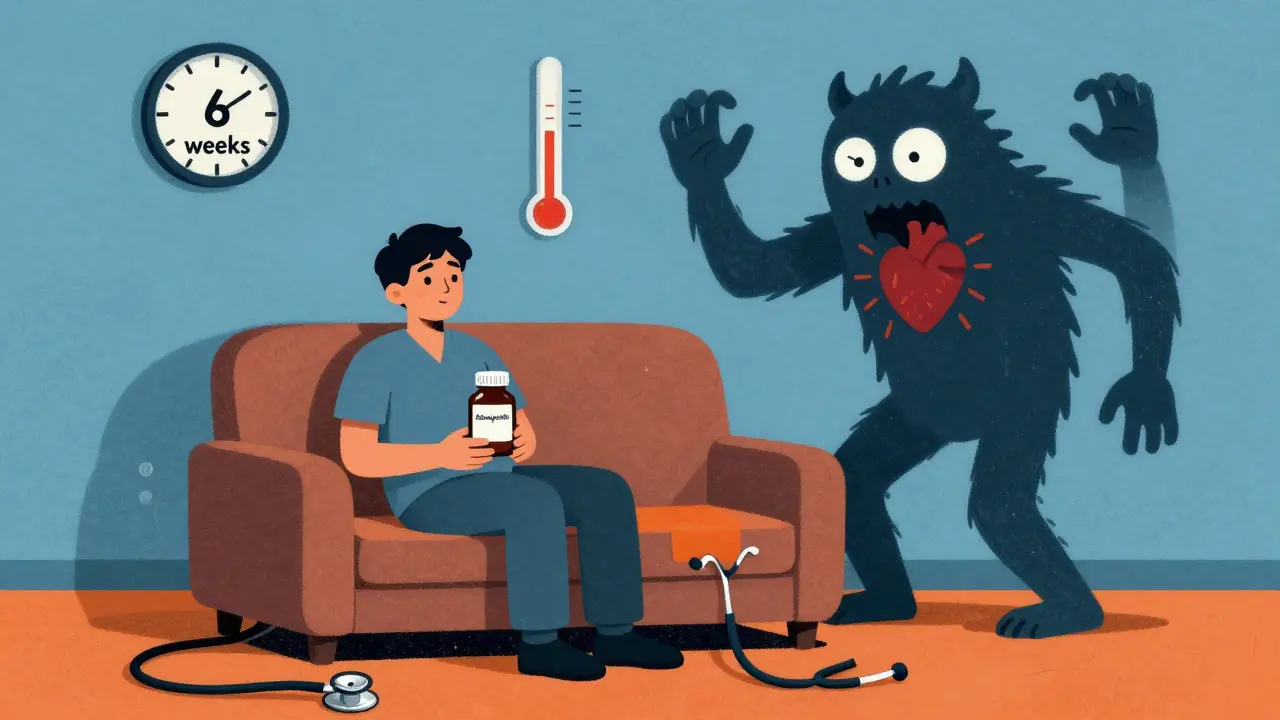
One patient, who posted on the Thyroid Help Forum, shared that after six weeks of taking 500 mg of ashwagandha daily with 100 mcg of levothyroxine, their TSH crashed from 1.8 to 0.08. They developed palpitations and couldn’t sleep. Their doctor had to cut their medication dose and monitor them for weeks.
A 2022 survey by the American Thyroid Association of 1,247 patients found that nearly 19% of those who took ashwagandha while on thyroid meds experienced symptoms of over-replacement. Twenty-nine of them ended up in the hospital.
The Problem with Unregulated Supplements
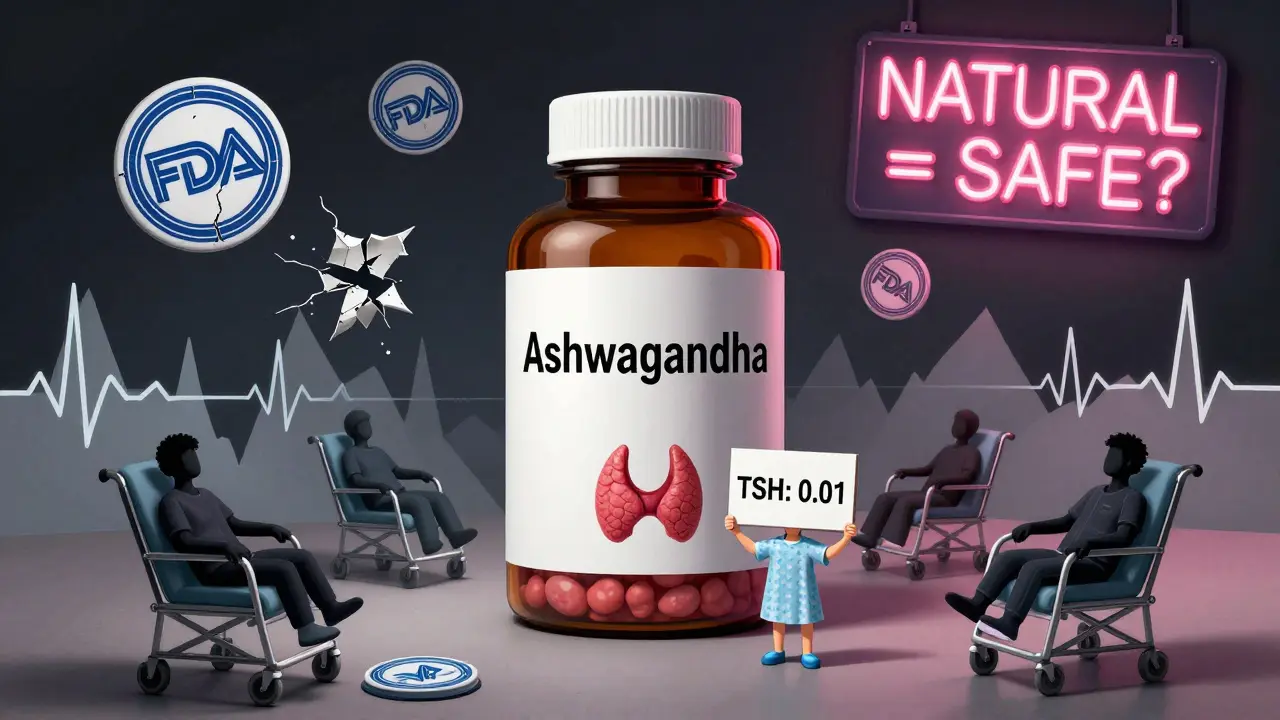
Here’s the kicker: ashwagandha supplements are not regulated like drugs. The FDA doesn’t test them for purity, potency, or consistency. A 2021 analysis by ConsumerLab.com tested 15 popular brands and found withanolide content varied from 1.2% to 7.8% - more than six times difference.
One bottle might have enough active ingredient to boost your thyroid. The next might be barely noticeable. You can’t predict how your body will react. And if you’re taking levothyroxine, even a small, unpredictable increase in thyroid hormone can throw your whole system off.
Between 2019 and 2022, the FDA’s adverse event database recorded 47 cases of thyroid dysfunction tied to ashwagandha. Thirty-two of those involved people already on thyroid medication.
What Doctors Are Saying
Endocrinologists are united on this: don’t mix them.
Dr. Angela Leung from UCLA’s Endocrine Clinic says, “Ashwagandha can tip the delicate balance of thyroid hormone replacement, potentially causing iatrogenic hyperthyroidism in patients who were previously well-controlled.”
Dr. Mary Hardy from Cedars-Sinai acknowledges ashwagandha might help people with untreated hypothyroidism - but stresses: “The therapeutic window for thyroid medication adjustment is narrow. Adding an unregulated herb creates unacceptable risks.”
The Endocrine Society’s 2023 guidelines are clear: patients on levothyroxine, liothyronine, or antithyroid drugs should avoid ashwagandha entirely unless under strict medical supervision with biweekly thyroid tests.
What If You Already Took It?
If you’ve been taking ashwagandha along with your thyroid meds, don’t panic - but don’t wait either.
First, stop taking the supplement immediately. Ashwagandha’s effects don’t vanish overnight. Its half-life is about 12 days. That means it can linger in your system for two to three weeks after you quit.
Second, get your thyroid levels checked. Ask your doctor for a full panel: TSH, free T4, and free T3. Don’t rely on TSH alone - it can be misleading if your body is already flooded with hormone.
Third, give yourself time. Your doctor may need to lower your levothyroxine dose. It can take weeks for your hormone levels to stabilize after stopping ashwagandha.
What About Using Ashwagandha Without Medication?
Some people with untreated hypothyroidism report feeling better after taking ashwagandha. One Reddit user shared that their T4 rose from 5.2 to 8.7 mcg/dL over three months - a significant improvement.
But here’s the catch: that’s not a cure. It’s a temporary boost. And it masks the real problem. Hypothyroidism often stems from autoimmune disease (like Hashimoto’s), iodine deficiency, or thyroid damage. Ashwagandha doesn’t fix those. It just tricks your body into making more hormone - which can lead to burnout, inflammation, or long-term thyroid dysfunction.
There’s also no evidence that ashwagandha is safe for long-term use. Studies only look at 8-12 weeks. What happens after six months? We don’t know.
What Should You Do?
If you’re on thyroid medication:
- Don’t take ashwagandha. The risk of over-replacement is real and documented.
- If you’re already taking it, stop. Tell your doctor. Get tested.
- Don’t assume “natural” means safe. Natural doesn’t mean harmless.
- If you’re considering ashwagandha for stress or sleep, talk to your doctor first. There are safer alternatives - magnesium, melatonin, or cognitive behavioral therapy - that won’t interfere with your hormones.
If you’re not on medication but suspect hypothyroidism:
- Get tested before trying any supplement.
- Don’t self-treat. Thyroid issues need diagnosis, not trial and error.
- Ashwagandha might help temporarily, but it doesn’t address the root cause.
The Bigger Picture
More than 27 million Americans take thyroid medication. About 3.4 million of them also use ashwagandha. That’s a ticking time bomb.
The National Institutes of Health is funding a $2.3 million study to track these interactions over 12 months. Results won’t be out until late 2024. But we already have enough evidence to act now.
The European Medicines Agency already requires ashwagandha labels to warn about thyroid medication interactions. The U.S. hasn’t caught up - yet. But doctors, labs, and patient groups are pushing for change.
Until then, the safest choice is simple: if you’re on thyroid medication, skip the ashwagandha. Your heart, your energy, and your long-term health depend on it.
Comments (14)
Elsa Rodriguez
I took ashwagandha for months thinking it was just a chill herb. Then I started having heart palpitations at 3 a.m. Turns out my TSH was 0.02. My endo nearly had a heart attack. Don't be me. Stop.
Amisha Patel
I'm from India and we've used this for generations. But I didn't know it could mess with thyroid meds. I'm glad someone finally put this out there. Just stop if you're on levothyroxine. Simple.
Serena Petrie
Natural doesn't mean safe. End of story.
Buddy Nataatmadja
I've seen this in my clinic. People come in with racing hearts, convinced it's anxiety. Then we check labs and boom - T4 at 28. Ashwagandha. Always ashwagandha. It's wild how many don't even realize they're taking it.
mir yasir
The scientific rigor presented in this post is commendable. The referenced study from the Journal of Alternative and Complementary Medicine demonstrates a statistically significant perturbation of the HPT axis. One must question the regulatory lacuna in the United States vis-à-vis the European Medicines Agency's proactive stance.
Stephanie Paluch
I was on it for sleep 😅 and didn't even think twice... then I got anxiety attacks and thought I was losing my mind. My doc said it was the ashwagandha. I cried. Then I stopped. I'm so glad I read this. 🙏
tynece roberts
so like i took ashwagandha for like 6 months cause my friend said it fixed her stress and i thought wow this is the answer but then i started shaking and cant sleep and i thought i was going crazy but then i went to the dr and they said my thyroid was on fire like literally on fire and i had to cut my levo dose in half and now im fine but i feel so dumb for not knowing this like why is no one talking about this???
Hugh Breen
This is why we need better labeling. I’ve seen patients from all walks of life get blindsided by this. It’s not their fault. The supplement industry is a Wild West. We need mandatory warnings - like cigarettes. 🇺🇸❤️🩹
Byron Boror
America’s falling apart because people take ‘natural’ supplements without thinking. In my day, we took pills that were tested. Now we’re trusting some guy in India who sells powders on Instagram. This is why we’re losing the war on healthcare.
Lorna Brown
It’s not just ashwagandha. It’s the whole paradigm of self-diagnosis and self-medication. We’ve outsourced our health to influencers and Amazon. The thyroid is a precision instrument. You don’t tune it with herbs you bought because a YouTube video said so.
Rex Regum
Oh wow, so now we’re demonizing ancient medicine because Big Pharma doesn’t own it? Let me guess - the next thing is we’ll be told turmeric causes cancer too. This is just another way to scare people away from natural healing.
Kelsey Vonk
I’m so glad this was written. I’ve been on levo for 8 years and my doc never mentioned this. I started ashwagandha last year for anxiety and didn’t think twice. I’ve been feeling off but blamed stress. Now I get it. Thank you for putting this out there. 💛
Emma Nicolls
i just stopped taking it after reading this omg i had no idea i was gonna have a heart attack or whatever im so scared but also so relieved i didnt wait longer like why does no one tell us this like why is this not on every bottle??
Jimmy V
I’m a pharmacist. I’ve seen 17 cases like this in 2 years. Ashwagandha + levothyroxine = ticking time bomb. Patients don’t tell us because they think it’s ‘just a supplement.’ I now put a sticker on every thyroid med bottle: ‘DO NOT MIX WITH ASHWAGANDHA.’ Simple. Loud. Necessary.