
QT Prolongation Risk Calculator
Patient Risk Assessment
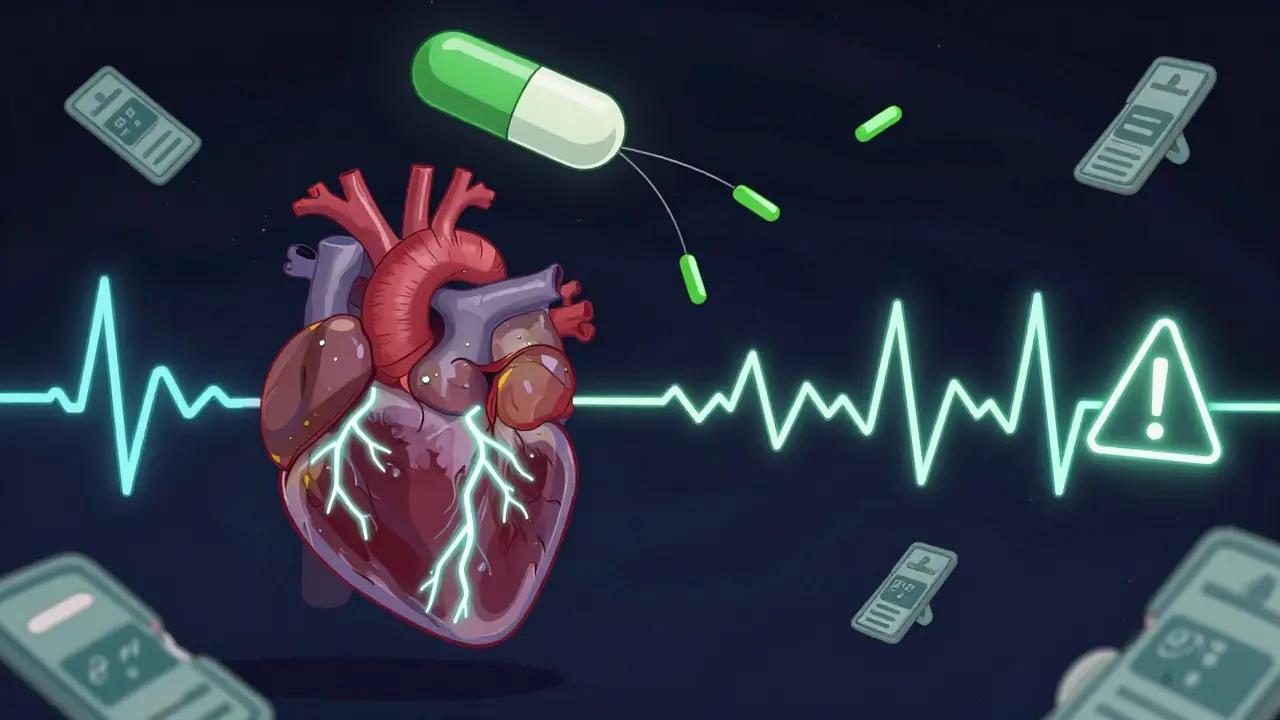
When you're nauseated from chemotherapy, surgery, or a bad case of food poisoning, ondansetron can feel like a lifesaver. It works fast, it’s widely available, and for years, it was the go-to drug for stopping vomiting. But here’s the part no one talks about until something goes wrong: ondansetron can slow down your heart’s electrical recovery - and that’s not just a minor side effect. It can trigger a dangerous rhythm called torsades de pointes, which can kill you before anyone even realizes what happened.
What Exactly Is QT Prolongation?
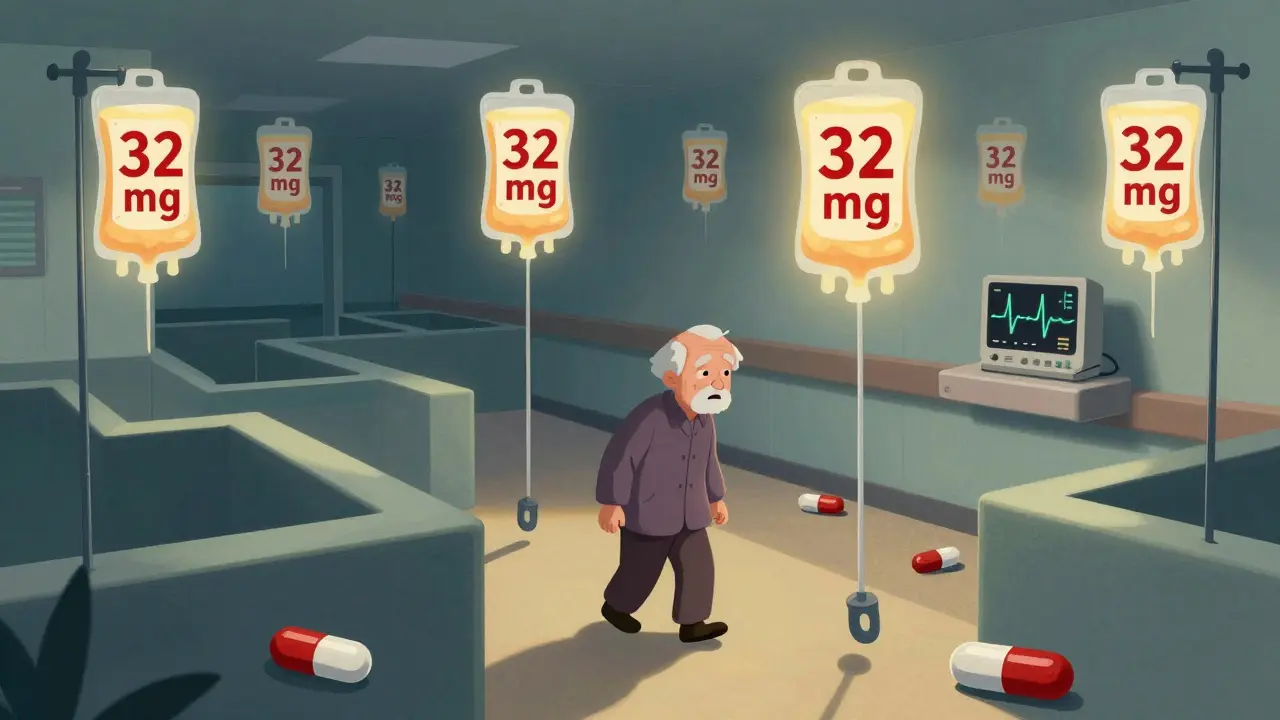
Your heart doesn’t just beat. It cycles. After each beat, it needs time to recharge - that’s the QT interval on an ECG. If that recharge time gets too long, your heart’s electrical system gets unstable. Think of it like a battery that won’t reset properly. When that happens, you risk torsades de pointes - a wild, erratic heartbeat that can spiral into cardiac arrest. It doesn’t always show symptoms. Sometimes, the first sign is a collapse. And yes, ondansetron can cause this.The FDA found out the hard way. In 2012, after reviewing data from a mandatory study, they issued a clear warning: single doses of 32 mg of intravenous ondansetron are dangerous. That dose, once common in ERs and hospitals, could stretch the QT interval by 20 milliseconds on average. For context, a QTc over 450 ms in men or 470 ms in women is already considered prolonged. A 20-millisecond jump can push someone from borderline to critical.
How Ondansetron Messes With Your Heart
It’s not magic. It’s biology. Ondansetron blocks hERG potassium channels in heart muscle cells. These channels are responsible for letting potassium flow out during repolarization - the quiet phase between beats. When they’re blocked, potassium can’t escape fast enough. The heart stays electrically charged longer. That’s QT prolongation. It’s the same mechanism that causes problems with certain antibiotics, antidepressants, and antifungals. But with ondansetron, the risk is real, measurable, and avoidable.A 2011 study in the Journal of Cardiovascular Pharmacology and Therapeutics showed that after a single IV dose of ondansetron, the QTc interval peaked at 20 milliseconds longer than baseline - and stayed elevated for two full hours. That’s not a fluke. It’s consistent. And it’s worse if you’re older, have heart failure, low potassium, or already have a long QT. One Johns Hopkins case series in 2019 found that three out of 15 elderly patients with preexisting heart conditions had QTc intervals over 500 ms after an 8 mg IV dose. That’s not a typo. That’s 500 milliseconds - well into the danger zone.
Not All Antiemetics Are Created Equal
Ondansetron isn’t alone. But it’s one of the most commonly used - and one of the riskiest. Here’s how the major antiemetics stack up:| Drug | Class | Max QTc Increase (IV) | Cardiac Risk Level | Current FDA Guidance |
|---|---|---|---|---|
| Ondansetron | 5-HT3 antagonist | 20 ms (at 32 mg) | High | Avoid 32 mg IV; max 16 mg IV |
| Dolasetron | 5-HT3 antagonist | 25 ms | Very High | Restricted use; not for nausea/vomiting |
| Granisetron | 5-HT3 antagonist | 6-10 ms | Low | Preferred in cardiac risk patients |
| Palonosetron | 5-HT3 antagonist | 9.2 ms | Low | Recommended over ondansetron for high-risk patients |
| Droperidol | Butyrophenone | 18-23 ms | High | Black box warning; requires ECG monitoring |
| Prochlorperazine | Phenothiazine | 10-15 ms | Moderate | Use with caution; monitor ECG |
| Dexamethasone | Corticosteroid | None | None | Safe alternative; often combined |
Granisetron and palonosetron are quieter on the heart. The American Society of Clinical Oncology now recommends palonosetron over ondansetron for patients with heart conditions. Why? Because it doesn’t stretch the QT interval nearly as much. Dexamethasone - a steroid - is also a safe bet. It doesn’t touch the QT interval at all. Many hospitals now use it as a first-line option for low-risk nausea.
Who’s at Real Risk?
It’s not everyone. But if you fit any of these, you’re in the danger zone:- Over age 65
- History of heart failure, bradycardia, or congenital long QT
- Low potassium or magnesium (common in cancer patients or those on diuretics)
- Taking other QT-prolonging drugs - like certain antibiotics (azithromycin), antidepressants (citalopram), or antifungals (fluconazole)
- IV administration (oral ondansetron is much safer)
One 2020 survey of anesthesiologists found that 78% changed their dosing habits after the FDA warning. Many now use 4-8 mg IV instead of 16 mg. Why? Because the benefit of a higher dose doesn’t outweigh the risk. For most patients, 4 mg works just as well. And if you’re on chemo? The National Comprehensive Cancer Network recommends combining a low dose of ondansetron with dexamethasone - not a high dose of ondansetron alone.
What Hospitals Are Doing Now
Back in 2011, only 37% of U.S. hospitals had formal protocols for monitoring ondansetron. By 2022, that number jumped to 92%. What changed? Real cases. Real deaths.Now, protocols look like this:
- Check baseline ECG if patient has heart disease, electrolyte issues, or is over 65.
- Correct potassium below 3.5 mEq/L or magnesium below 1.8 mg/dL before giving IV ondansetron.
- Limit single IV dose to 8 mg for high-risk patients - not 16.
- Monitor ECG for 4 hours after IV dose if QTc is over 440 ms.
- Pharmacists must verify QTc calculations before high-dose administration.
At Massachusetts General Hospital, one ER physician reported seeing QTc spikes of 25-30 ms in heart failure patients on 8 mg IV ondansetron. They switched to dexamethasone for low-risk cases. That’s not radical. That’s smart.
The Bigger Picture: What’s Next?
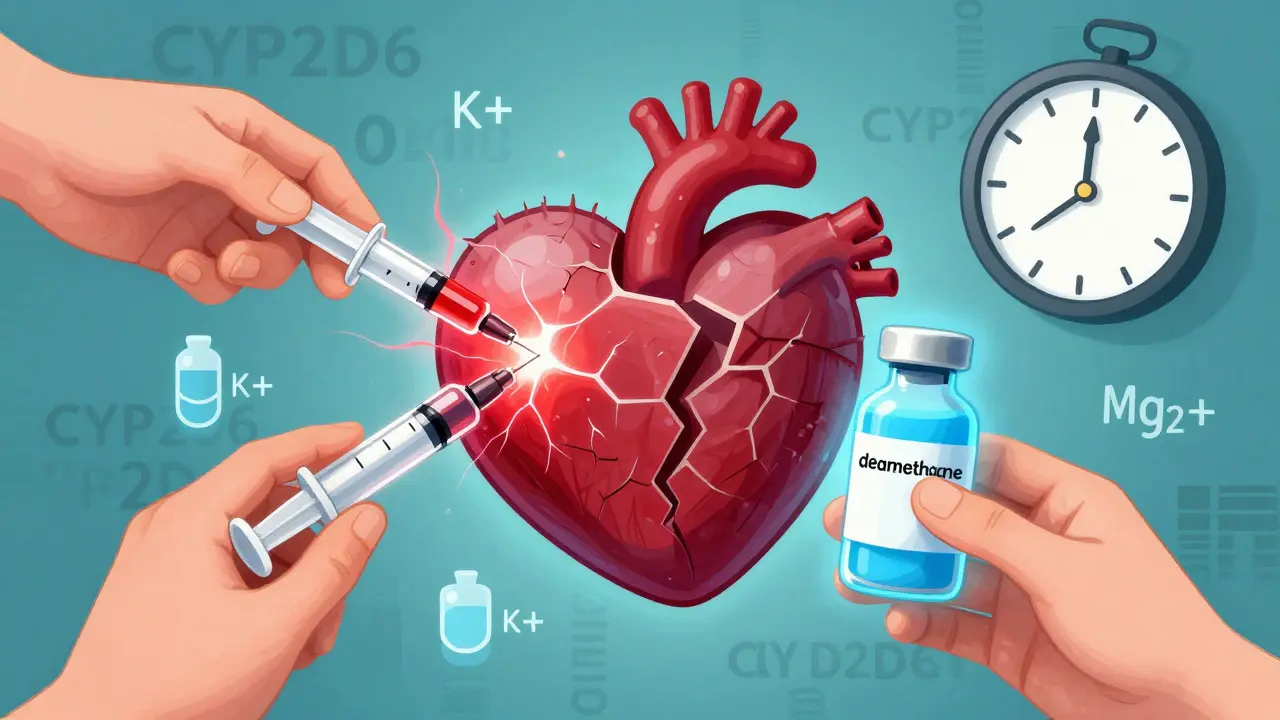
The FDA has logged 142 cases of torsades de pointes linked to ondansetron between 2012 and 2022. 87% involved doses over 16 mg IV. That’s preventable.Research is moving toward personalization. A 2022 study from the University of Florida found that people with a CYP2D6 poor metabolizer gene variant clear ondansetron slower - meaning more drug hangs around longer, increasing QT risk. In the future, genetic testing might guide dosing.
Meanwhile, the NIH is running the QT-EMETIC trial (NCT04892345), tracking 1,200 cancer patients to see if adjusting ondansetron based on genetics and ECGs can prevent arrhythmias. Results are expected in 2024.
And yes - IV ondansetron use is dropping. Since 2012, it’s fallen 22% in the U.S. Market data shows that safer alternatives like palonosetron and aprepitant are growing fast. They’re not perfect. But they’re safer.
What Should You Do?
If you’re a patient:- Ask if your nausea can be treated with dexamethasone or granisetron instead.
- If you’re getting IV ondansetron, ask if you’ve had an ECG and if your potassium and magnesium are checked.
- Never take more than 8 mg IV unless your doctor has a very clear reason - and even then, monitor closely.
If you’re a clinician:
- Stop using 16 mg or 32 mg IV ondansetron as routine.
- Use 4-8 mg IV for most patients. Save higher doses for extreme cases - and only after ECG and electrolytes.
- Combine with dexamethasone. It works better and is safer.
- Know your QT correction formulas. Bazett’s is common, but Fridericia is more accurate for heart rate extremes.
There’s no shame in choosing a safer drug. Ondansetron isn’t evil. It’s just not as safe as we thought. And now we know better. The question isn’t whether it works - it’s whether the risk is worth it.
Can oral ondansetron cause QT prolongation?
Oral ondansetron carries much lower risk than IV. The FDA confirms that single oral doses up to 24 mg (used for chemotherapy-induced nausea) don’t require dosage adjustment. Peak blood levels are lower and slower, so the QT effect is minimal. Still, if you have existing heart conditions, low potassium, or are on other QT-prolonging drugs, even oral ondansetron should be used with caution and possibly an ECG.
Is ondansetron safe for elderly patients?
Elderly patients are at higher risk. Aging slows drug clearance, and many have underlying heart issues or low electrolytes. Studies show that even 8 mg IV can push QTc over 500 ms in older adults with comorbidities. For patients over 65, use 4 mg IV max, check ECG and electrolytes first, and consider alternatives like granisetron or dexamethasone.
Why is IV ondansetron riskier than oral?
IV ondansetron hits the bloodstream instantly, causing a sharp spike in drug concentration. That rapid peak overwhelms the heart’s potassium channels, leading to immediate QT prolongation. Oral forms are absorbed slowly over hours, giving the body time to adjust. The difference in peak levels is why the FDA warned against IV doses over 16 mg - and why 8 mg IV is now the safer standard.
What should I do if I’m on multiple QT-prolonging drugs?
Avoid ondansetron entirely. Combining even low-risk drugs can push QT prolongation into dangerous territory. For example, using ondansetron with citalopram or azithromycin increases torsades risk by 3-5 times. Always review all medications with a pharmacist. Safer alternatives like dexamethasone, metoclopramide (with caution), or aprepitant should be considered.
Are there any antiemetics with no cardiac risk?
Yes. Dexamethasone - a steroid - has no known effect on the QT interval and is widely used in combination with other antiemetics. Metoclopramide has a small risk but is generally lower than ondansetron. Aprepitant (Emend) and fosaprepitant are NK1 receptor antagonists with no QT prolongation risk and are excellent options for high-risk patients, especially in chemotherapy settings.
Comments (10)
Leon Hallal
Ondansetron isn't some miracle drug. I've seen patients crash after a simple 8mg IV. No warning, no symptoms, just flatline. Hospitals still push it because it's cheap and fast. But when your grandma dies on a gurney because someone didn't check her potassium, that's not medical care. That's negligence.
Judith Manzano
This is such an important post. I work in oncology and we switched to palonosetron + dexamethasone two years ago. The drop in arrhythmia events was dramatic. It’s not about fear-it’s about doing better. Patients deserve safer options, and we owe it to them to stay updated.
rafeq khlo
The FDA data is misleading because it does not account for polypharmacy interactions. Most cases of torsades occur in patients on three or more QT-prolonging agents. The blame is misplaced. Ondansetron is not the problem. Incompetent prescribing is. Medical education must be standardized. Until then, deaths will continue.
Morgan Dodgen
They don't want you to know this but the pharmaceutical industry funds the guidelines. Ondansetron is still on formularies because Big Pharma owns the CMEs. The real story? The FDA warning was buried under 142 pages of legal disclaimers. And now they're pushing palonosetron? Same company. Same playbook. They just rebranded the poison.
Philip Mattawashish
You're all missing the point. This isn't about drugs. It's about how medicine has become a factory. Patients are units. Time is money. Doctors don't read ECGs anymore. They click 'order' and walk away. We stopped caring when we stopped thinking. Ondansetron is just the symptom. The disease is systemic.
Tom Sanders
I just got off shift. We gave a patient 16mg IV ondansetron. No ECG. No labs. I didn't say anything. I'm tired. I'm overworked. And honestly? I didn't think it mattered. Now I'm wondering if I just signed someone's death warrant.
Jazminn Jones
It is imperative to recognize that the Bazett correction formula, while historically prevalent, exhibits significant inaccuracies at extremes of heart rate. The Fridericia formula, which utilizes a power of 1/3 rather than 1/2, demonstrates superior reliability in clinical populations with tachycardia or bradycardia. Failure to adopt this standard constitutes suboptimal care.
Stephen Rudd
Everyone is scared of ondansetron but no one talks about how droperidol is just as bad. And it's cheaper. So why are we replacing one dangerous drug with another? This is performative medicine. We're not fixing the system. We're just swapping out the bullets.
Erica Santos
So we're supposed to be grateful that hospitals now monitor QT intervals after they started killing people? Wow. What a breakthrough. Next they'll install seatbelts in ambulances after the first 300 crashes. Progress is just a euphemism for 'we finally got around to fixing what we broke.'
Judith Manzano
Tom, your comment hit hard. I’ve been there too. I once gave 16mg IV to a 72-year-old with CHF because the order was there and no one questioned it. I didn’t know the ECG showed a QTc of 480. That patient coded 45 minutes later. I’ve never stopped thinking about it. We need systems, not just vigilance.