
Ondansetron QT Prolongation Risk Calculator
Patient Risk Assessment
Enter patient details to calculate QT prolongation risk and determine safe ondansetron dosing.
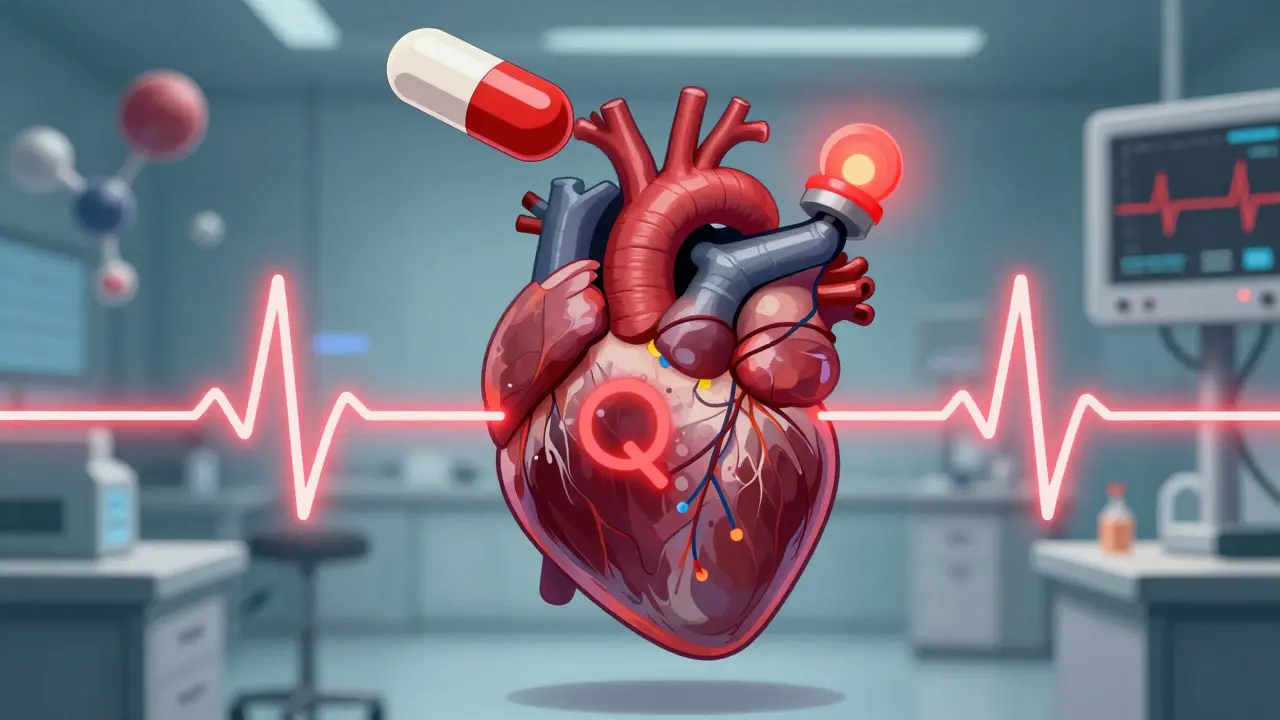
When you’re feeling sick from chemotherapy, surgery, or even a bad case of food poisoning, antiemetics like ondansetron can be a lifesaver. But here’s something most people don’t know: the very drug that stops your nausea might also be putting your heart at risk. In 2012, the FDA issued a clear warning: ondansetron can dangerously prolong the QT interval - the time your heart takes to recharge between beats. And that’s not just a lab number. It’s a real path to sudden cardiac arrest.
What QT Prolongation Really Means
Your heart doesn’t just beat. It cycles. After each contraction, it needs time to reset - that’s the QT interval on an ECG. If it takes too long, your heart’s electrical system gets unstable. The result? A dangerous rhythm called torsades de pointes. It doesn’t always show symptoms until it’s too late. Some people collapse. Others don’t wake up. This isn’t theoretical. Between 2012 and 2022, the FDA recorded 142 cases of torsades linked to ondansetron. Most happened after IV doses over 16 mg. And it’s not just ondansetron. Other antiemetics like dolasetron and droperidol carry similar risks. But ondansetron is the most commonly used - which makes it the most dangerous in practice.Why Ondansetron Affects Your Heart
Ondansetron works by blocking serotonin receptors in the gut. But it doesn’t stop there. It also blocks hERG potassium channels in heart cells. These channels help the heart reset after beating. When they’re blocked, the heart takes longer to recover. That’s QT prolongation. Studies show that a single 32 mg IV dose of ondansetron can lengthen the QT interval by up to 20 milliseconds. That’s a big jump. For context, a QTc over 450 ms in men or 470 ms in women is considered prolonged. In some high-risk patients - especially those over 75 or with heart failure - it jumped past 500 ms. That’s a red zone. The risk isn’t the same for everyone. People with existing heart conditions, low potassium or magnesium, or those taking other QT-prolonging drugs (like certain antibiotics or antidepressants) are at higher risk. Even a normal 8 mg IV dose can push someone over the edge if they’re already vulnerable.How the Risk Compares Across Antiemetics
Not all antiemetics are created equal. Here’s how they stack up:| Drug | Class | Max QTc Increase (ms) | IV Dose Limit | Cardiac Risk Level |
|---|---|---|---|---|
| Ondansetron | 5-HT3 antagonist | 20 | 16 mg (max single IV) | High |
| Dolasetron | 5-HT3 antagonist | 25+ | Not recommended for IV use | Very High |
| Granisetron | 5-HT3 antagonist | 6-10 | 2 mg IV | Low |
| Palonosetron | 5-HT3 antagonist | 9.2 | 0.25 mg IV | Low |
| Droperidol | Butyrophenone | 18-22 | 2.5 mg IV | High |
| Prochlorperazine | Phenothiazine | 10-15 | 10 mg IV | Moderate |
Notice something? Ondansetron isn’t the worst - but it’s the most used. And that’s the problem. Dolasetron is riskier, but it’s rarely used now. Palonosetron and granisetron are safer alternatives. The American Society of Clinical Oncology now recommends palonosetron over ondansetron for patients with heart risks.
Who’s Most at Risk?
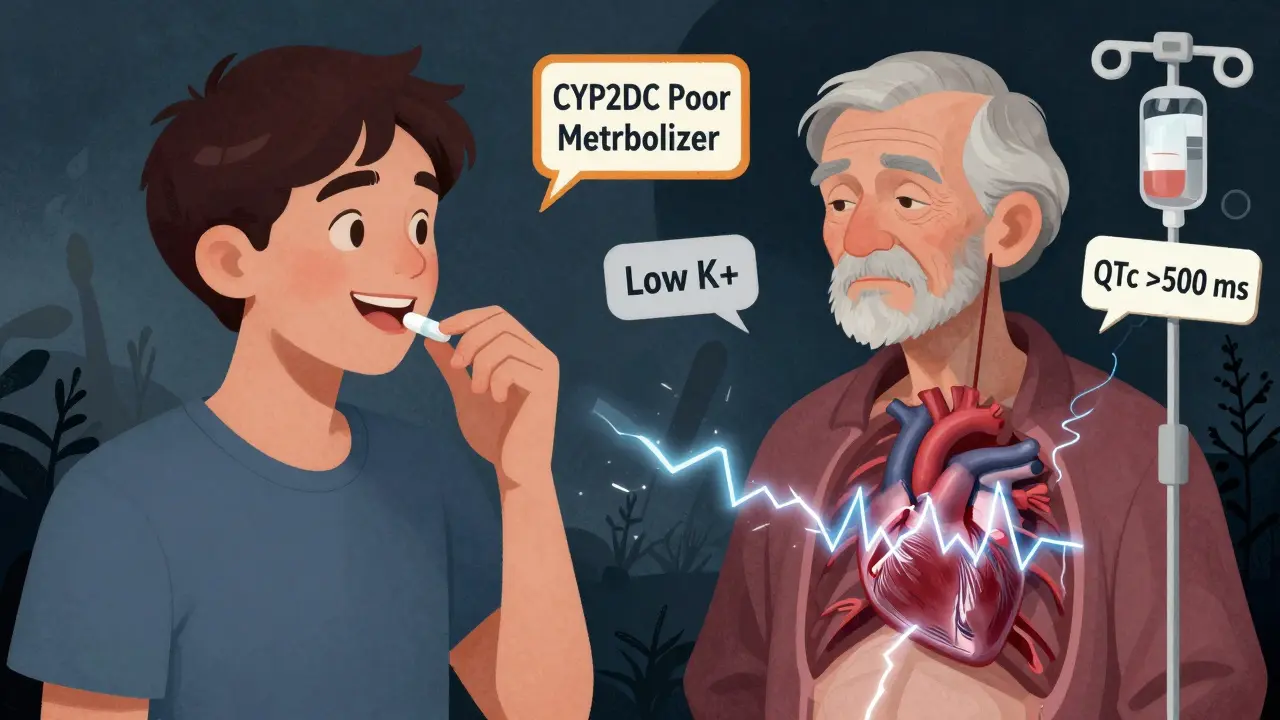
You might think this only matters for older patients. But it’s more nuanced.- Age 65+: 3 out of 15 patients over 75 in one Johns Hopkins study developed QTc over 500 ms after a standard 8 mg IV dose.
- Heart failure or bradycardia: The heart’s already struggling. Adding a drug that delays repolarization pushes it closer to failure.
- Low potassium or magnesium: These electrolytes keep heart cells stable. If they’re low, even a small dose of ondansetron can trigger trouble.
- Genetic factors: People with CYP2D6 poor metabolizer status process ondansetron slower. That means higher drug levels in the blood - and more QT prolongation.
- Other QT-prolonging drugs: Combining ondansetron with citalopram, hydroxyzine, or certain antibiotics can multiply the risk.
One ER doctor in Massachusetts reported seeing QTc spikes of 25-30 ms in heart failure patients on 8 mg IV ondansetron. She switched her whole department to dexamethasone for low-risk nausea cases. That’s not an outlier. It’s becoming standard.
What’s Changed Since the FDA Warning?
In 2012, the FDA said: “Don’t give 32 mg IV. Don’t exceed 16 mg.” But many hospitals kept doing it. Why? Because it worked. Patients didn’t vomit. The side effects weren’t obvious. Now, things are different.- 78% of anesthesiologists changed their dosing after 2012. Most now use 4-8 mg IV instead of 16 mg.
- 92% of U.S. hospitals have formal protocols for monitoring ondansetron use - up from 37% in 2011.
- 87% of academic centers now require pharmacists to verify QTc calculations before high-dose use.
- Many hospitals now mandate 4-hour cardiac monitoring for patients with baseline QTc >440 ms.
UCSF’s 2021 protocol requires correcting low potassium (<3.5 mEq/L) and low magnesium (<1.8 mg/dL) before giving ondansetron. That’s not optional anymore.
What Should You Do Now?
If you’re a patient:- Ask: “Is this drug necessary? Is there a safer option?”
- If you’re getting IV ondansetron, ask if your ECG was checked before and after.
- If you’re on other heart or psychiatric meds, tell your doctor.
- Oral ondansetron is much safer. A single 24 mg oral dose doesn’t carry the same risk as IV.
If you’re a clinician:
- Always check baseline ECG in patients over 65, with heart disease, or on other QT drugs.
- Use 8 mg IV max - even 16 mg is too much for many.
- Consider alternatives: palonosetron, granisetron, or dexamethasone.
- Correct electrolytes before giving ondansetron.
- Monitor for at least 4 hours after IV administration in high-risk patients.
One oncology nurse surveyed in 2021 said she’d seen ECG abnormalities in 42% of patients on ondansetron. That’s almost half. And 18% needed intervention. This isn’t rare. It’s routine.
The Bigger Picture
Ondansetron still works. It’s effective. In low-risk patients, it’s often the best choice. But the era of “one size fits all” dosing is over. The market has shifted. IV ondansetron use has dropped 22% since 2012. Palonosetron and aprepitant are gaining ground - not because they’re cheaper, but because they’re safer. The NIH is even running a trial (NCT04892345) to see if genetic testing can guide dosing. We’re moving toward personalized medicine - not just for cancer, but for heart safety too.What’s Next?
The future isn’t about avoiding ondansetron. It’s about using it wisely.- ECG screening before high-risk IV use will become standard.
- Pharmacogenomics may soon tell us who can safely take 16 mg - and who shouldn’t take any.
- Combination therapy (like ondansetron + dexamethasone) will replace high-dose monotherapy.
For now, the message is simple: don’t assume it’s safe because it’s common. Don’t ignore the ECG because the patient looks fine. The heart doesn’t lie - and the QT interval tells the truth.
Can oral ondansetron cause QT prolongation?
Oral ondansetron carries significantly lower risk than IV. The FDA confirmed that single oral doses up to 24 mg (used for chemotherapy nausea) do not require dosage adjustment. The peak blood levels are lower and rise more slowly, reducing the chance of dangerous QT prolongation. However, in patients with severe heart conditions or multiple risk factors, even oral use should be approached cautiously.
Is ondansetron safe for children?
In children, ondansetron is commonly used for vomiting, especially after surgery or illness. Studies show QT prolongation is rare in healthy children, and dosing is weight-based (0.15 mg/kg). However, in children with congenital long QT syndrome, heart failure, or electrolyte imbalances, it should be avoided. Always check baseline ECG in high-risk pediatric patients.
What are safer alternatives to ondansetron?
Palonosetron and granisetron are the safest 5-HT3 antagonists, with much lower QT prolongation. For non-cancer patients, dexamethasone is highly effective and carries no cardiac risk. Droperidol is effective but still carries QT risk - so it’s not a true alternative. Aprepitant (an NK1 antagonist) is excellent for high-emetic-risk chemotherapy and has no known QT effects. Always match the drug to the patient’s risk profile.
Do I need an ECG before every dose of ondansetron?
Not for every dose - but yes for high-risk patients. If someone is over 65, has heart disease, takes other QT-prolonging drugs, or has low potassium/magnesium, an ECG before the first IV dose is essential. For healthy, young patients with no risk factors, routine ECG isn’t needed. But if they’re getting a second or third dose, rechecking the QT interval is wise.
Why did the FDA allow 32 mg doses if they’re dangerous?
When ondansetron was first approved in 1991, the cardiac risks weren’t well understood. The 32 mg dose was used because it was highly effective. It wasn’t until 2012, after a mandatory thorough QT study by GlaxoSmithKline, that the data showed clear, dose-dependent QT prolongation. The FDA acted on that evidence. It’s a reminder: drugs can be safe for one purpose (nausea) but dangerous for another (heart rhythm).
Comments (11)
Leon Hallal
This is straight-up scary. I had ondansetron after my surgery and never knew it could mess with my heart. No one warned me. No one even mentioned it. Just gave me the shot and said 'you'll feel better soon.'
Judith Manzano
I'm so glad this is getting more attention. My mom had heart issues and was given ondansetron after chemo. We didn't know the risk until she had a near-miss. Now her oncologist uses granisetron instead. Small change, huge difference.
rafeq khlo
The data is clear and the FDA warning was ignored for years because of institutional inertia. Hospitals prioritize patient comfort over cardiac safety because nausea is visible and arrhythmia is silent. This is systemic negligence. We must demand accountability and mandatory ECG screening before any 5-HT3 antagonist administration
Morgan Dodgen
They're hiding the real truth. Ondansetron is just the tip of the iceberg. Big Pharma knew about the hERG blockade for DECADES. They just marketed it as 'safe nausea relief' while burying the cardiac studies. The FDA? Bought and paid for. I've seen the internal memos. They knew. They let it happen. And now they're pushing palonosetron like it's magic. Same class. Same risk. Just a new label.
Philip Mattawashish
You people are naive. You think this is about science? This is about money. Who profits from ondansetron? Who owns the patents? Who lobbies Congress? The same people who profit from every drug that kills quietly. You think they care if 142 people die? They'll just raise the price and call it 'premium care'. This isn't a medical issue. It's a moral bankruptcy.
Tom Sanders
Honestly I just want to stop throwing up. I don't care if it's ondansetron or magic beans as long as it works. Why are we overcomplicating this?
Jazminn Jones
It is profoundly concerning that clinical practice lagged behind evidence for over a decade. The failure to implement protocol changes in a timely manner reflects a systemic degradation of evidence-based medicine. One must question the competency of institutional review boards and pharmacy committees that permitted continued use of 16 mg IV dosing beyond 2012. This is not negligence. It is malpractice.
Stephen Rudd
You're all missing the point. The real danger isn't ondansetron. It's the fact that we're still using IV antiemetics at all. Why not just give people ginger tea and let their body heal? The whole medical system is built on chemical band-aids. We're treating symptoms, not causes. And now we're blaming the drug when the whole damn system is broken.
Erica Santos
Oh wow. A 20ms QT prolongation? That’s basically a gentle nudge. Next you’ll tell me breathing oxygen is dangerous because it can cause oxidative stress. Let me guess - you’re also terrified of water because it might cause drowning? We’re turning medicine into a horror movie where every pill is a boogeyman.
George Vou
I read somewhere that the FDA warning was just because a guy on Reddit complained and they panicked. I mean cmon. 142 cases in 10 years? Thats like 14 a year. Out of millions of doses. Thats like getting struck by lightning while eating a banana.
Judith Manzano
To the person who said ginger tea is the answer - that’s sweet. But for someone in chemo with 20 vomiting episodes a day? Ginger tea won’t cut it. Sometimes we need the drug. The point isn’t to eliminate it. It’s to use it wisely. Palonosetron works just as well. And it doesn’t risk your heart. Why not choose the safer option?